
Beam Shop
The Unnamable
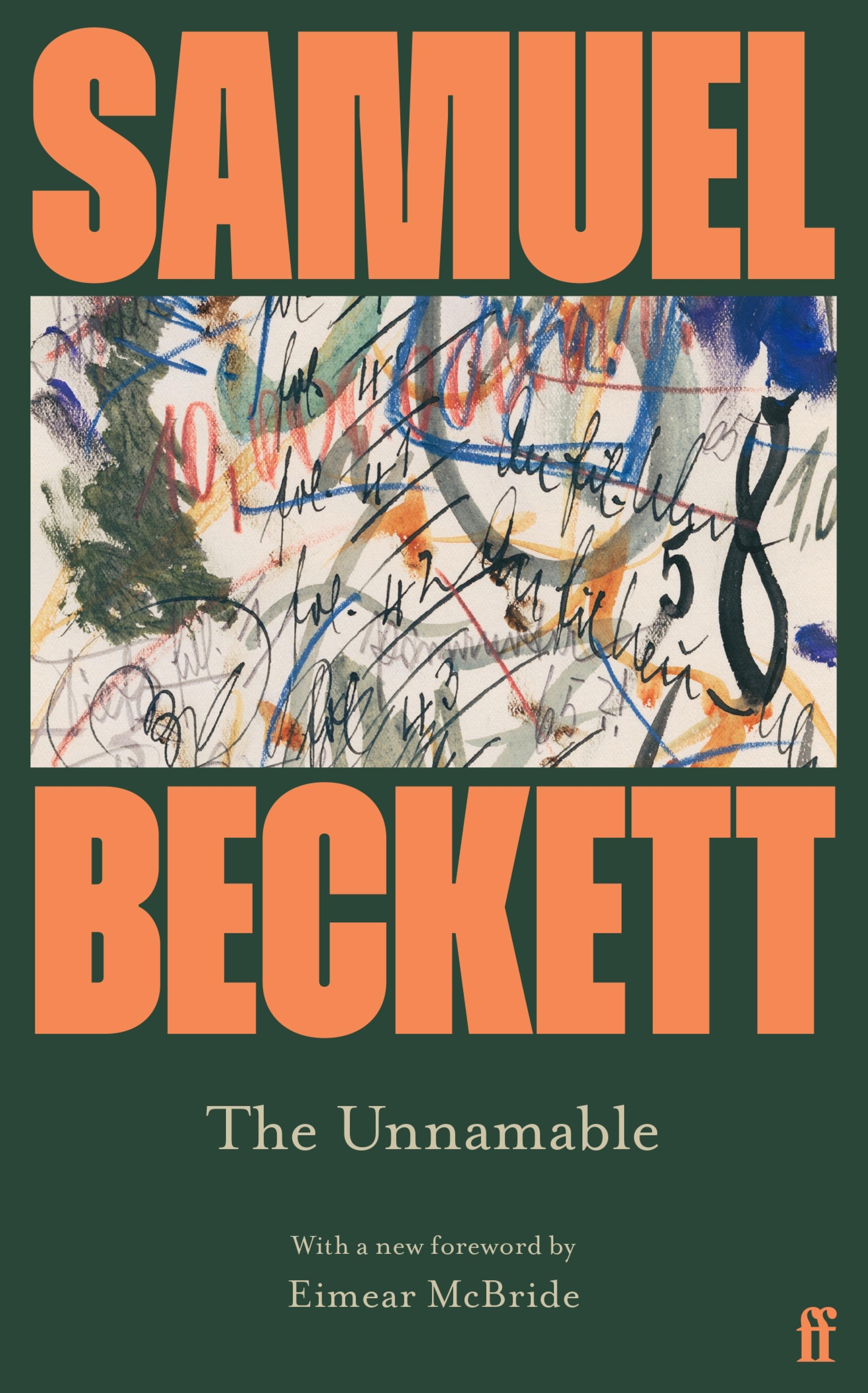
The third of the three greatest novels by the era-defining Nobel laureate, reissued for a new generation.
I can't go on, I'll go on.
The Unnamable is a voice. Is it curled up inside an urn, on the point of being born, or is it about to die? Haunted by visitors, it weeps. The Unnamable sifts disjointed memories, grapples with the problem of existence and ultimately perpetuates itself through an endless stream of fragmented words.
The Unnamable is the last of the three great novels Samuel Beckett produced during his 'frenzy of writing' in the late 1940s. The others are Molloy and Malone Dies.
Samuel Beckett was an Irish playwright, theatre director, novelist and poet. Born in Dublin in 1906, he studied French, Italian and English at Trinity College. He moved to Paris in 1928 - where he would spend much of his life, writing mostly in French - to teach English, and worked as a courier for the French resistance during World War II. His most famous play, Waiting for Godot, was first performed in 1953. He then wrote Endgame (1957), Krapp's Last Tape (1958) and Happy Days (1961). A modernist, associated with the 'Theatre of the Absurd', his work eschews conventional plotting or structure, exploring the human condition as bleakly humorous and profound, using laughter as a weapon against despair. Over his career, his work became increasingly experimental and minimalist, stripped down to the most essential elements: Play (1962) places its characters in funeral urns with only their heads visible, and Not I (1972) consists of a mouth speaking in the darkness. In the 1940s and 50s Beckett also published a number of acclaimed novels. He won the Nobel Prize for Literature in 1969. Beckett died in 1989 and is buried in Montparnasse Cemetery in Paris.
Versandkostenfreie Lieferung! (eBook-Download)
Als Sofort-Download verfügbar
- Artikel-Nr.: SW9780571397341110164
Bewerten
Ein Blick ins Buch
- Artikelnummer SW9780571397341110164
-
Autor
Samuel Beckett
- Wasserzeichen ja
- Verlag Faber & Faber
- Seitenzahl 252
- Barrierefreiheit
- ISBN 9780571397341