
Beam Shop
The Apprehension of Beauty
The Role of Aesthetic Conflict in Development, Art and Violence
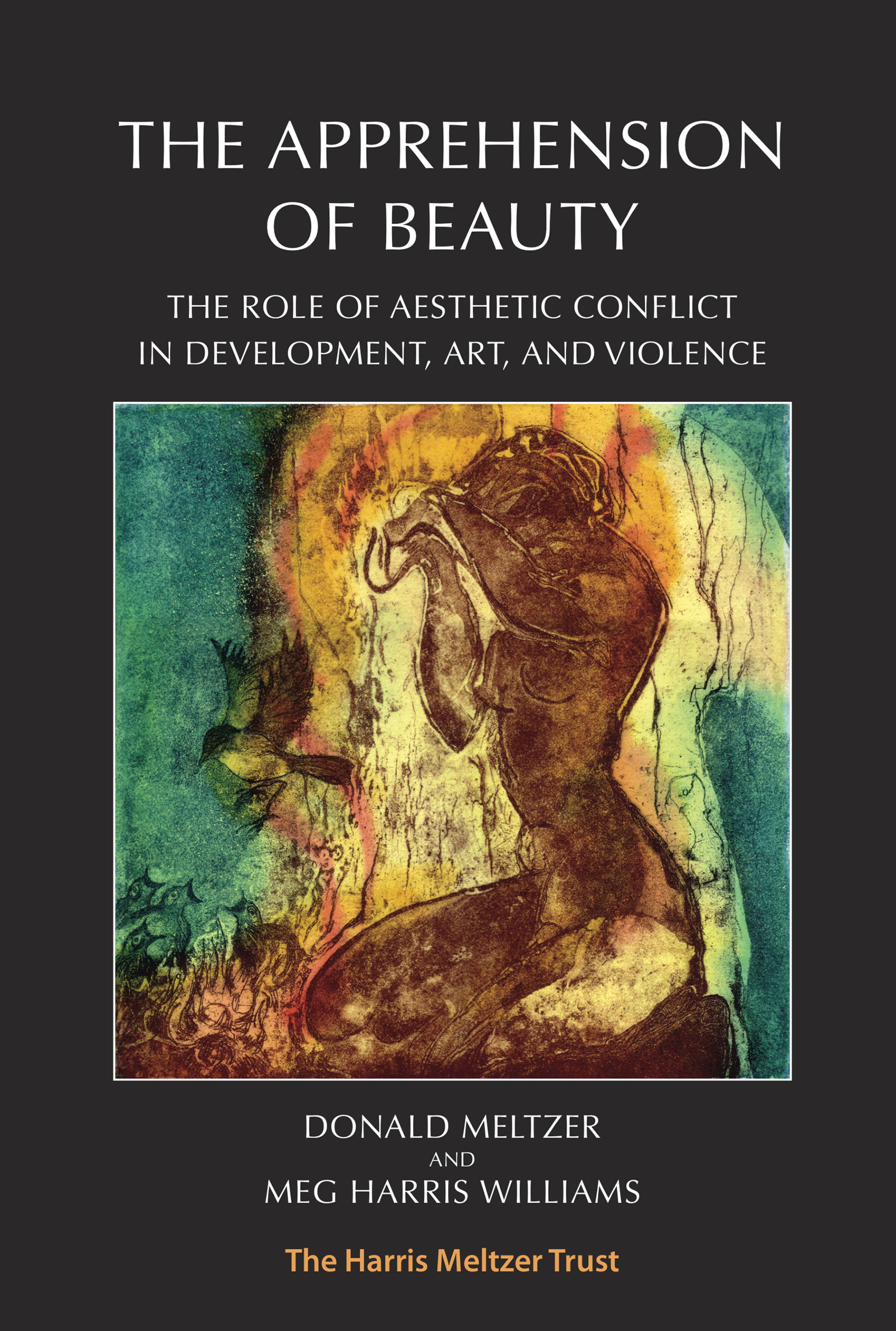
In this book Donald Meltzer formulates his concept of 'aesthetic conflict', at the heart of personality development. Clinical material interdigitates with literary criticism by Meg Harris Williams illustrating the same theme. The revised psychoanalytic model of the mind that results suggests how the aesthetic aspects of just being born can have simultaneously a most violent and a most tender impact upon the human mind. The impact of the aesthetic conflict is investigated by the two authors in work with patients, in creativity and art. They demonstrate how the psychoanalytical process itself stands as an artform; and how clinical material, dreams, artworks, poems and plays can all be connected to the aesthetic conflict.
Donald Meltzer (1923–2004) was born in New York and studied medicine at Yale. After practising as a psychiatrist specialising in children and families, he moved to England to have analysis with Melanie Klein in the 1950s, and for some years was a training analyst with the British Society. He worked with both adults and children, and was innovative in the treatment of autistic children; in the treatment of children he worked closely with Esther Bick and Martha Harris whom he later married. He taught child psychiatry and psychoanalytic history at the Tavistock Clinic. He also took a special scholarly interest in art and aesthetics, based on a lifelong love of art. Meltzer taught widely and regularly in many countries, in Europe, Scandinavia, and North and South America, and his books have been published in many languages and continue to be increasingly influential in the teaching of psychoanalysis.
His first book, The Psychoanalytical Process, was published by Heinemann in 1967 and was received with some suspicion (like all his books) by the psychoanalytic establishment. Subsequent books were published by Clunie Press for the Roland Harris Educational Trust which he set up together with Martha Harris (now the Harris Meltzer Trust). The Process was followed by Sexual States of Mind in 1973, Explorations in Autism in 1975; The Kleinian Development in 1978 (his lectures on Freud, Klein and Bion given to students at the Tavistock); Dream Life in 1984; The Apprehension of Beauty in 1988 (with Meg Harris Williams); and The Claustrum in 1992.
Meg Harris Williams, a writer and artist, studied English at the Universities of Cambridge and Oxford and art at the Accademia di Belle Arti in Florence, and has had a lifelong psychoanalytic education, working closely with Donald Meltzer. She has written and lectured extensively in the UK and abroad on psychoanalysis and literature. She is a visiting lecturer for AGIP and at the Tavistock Centre in London, and an Honorary Member of the Psychoanalytic Center of California. She is married with four children and lives in Farnham, Surrey.
Foreword
Meg Harris Williams
Introduction
Donald Meltzer
1. The apprehension of beauty (1973)
Donald Meltzer
2. Aesthetic conflict: its place in development
Donald Meltzer
3. On first impressions
Donald Meltzer
4. On aesthetic reciprocity
Donald Meltzer
5. The role of the father in early development
Donald Meltzer
6. The problem of violence
Donald Meltzer
7. The undiscovered country: the shape of the aesthetic conflict in Hamlet
Meg Harris Williams
(i) The mould of form
(ii) The lobby of dreams
(iii) The Queen's arras
(iv) The yet unknowing world
8. The place of aesthetic conflict in the analytic process
Donald Meltzer
9. The retreat from aesthetic conflict: cynicism, perversity and the vulgarisation of taste
Donald Meltzer
10. Recovery of the aesthetic object
Donald Meltzer
11. Holding the dream: the nature of aesthetic appreciation
Meg Harris Williams
(i) Aesthetic appreciation through symbolic congruence
(ii) Beneficence in space: Stokes on Turner
(iii) On Westminster Bridge
12. The shadows in the cave and the writing on the wall
Donald Meltzer
Addendum I: Concerning the social basis of art
Donald Meltzer and Adrian Stokes
Addendum II: Mindlessness – the developmental relation of psychosomatics, hyperactivity, and hallucinosis
Donald Meltzer
Afterword
Maria Rhode
References
Index
Versandkostenfreie Lieferung! (eBook-Download)
Als Sofort-Download verfügbar
- Artikel-Nr.: SW9781912567072110164
Bewerten
Ein Blick ins Buch
- Artikelnummer SW9781912567072110164
-
Autor
Donald Meltzer, Meg Harris Williams
- Wasserzeichen ja
- Verlag Harris Meltzer Trust
- Seitenzahl 396
- Barrierefreiheit
- ISBN 9781912567072