
Beam Shop
The Tarragona Vortex
Volume 2. Tarraco. The Ancient Heritage: Roman Hispania in Cultural Memory. 2nd c. BC - 3rd c. AD
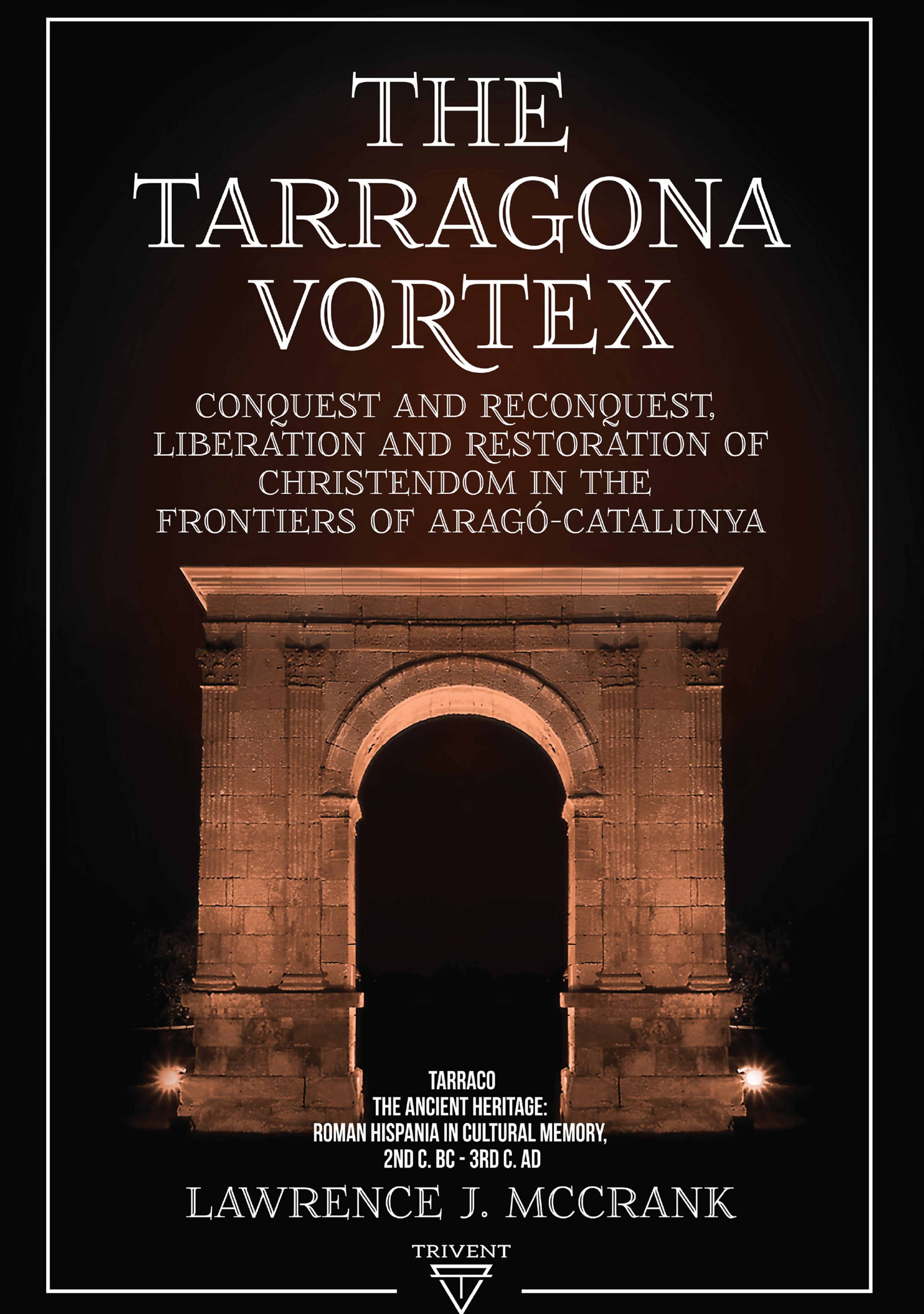
Roman Tarraco was the foundation for what came afterward at the same site in Late-Antiquity and the Islamic and Latin Christian periods, but it was an overlay on an Iberian habitation, Cissis, a coastal trading post with the Phocaean Greek partner, Kesse; a Punic counterpart on the other side of the River Tulcis; and above them all a refuge fort on the summit of Mt. Tarrakon. This history traces the amalgamation of these and their Romanization during the Punic Wars I-III, and Rome's conversion of Tarraco into an imperial provincial capital. It was a complex of the main army base, a vast war industry, the government for the Hispania Citerior that became the Tarraconensis, a port, and trade center for the Western Mediterranean. It grew in population to become a major city with sophistication imitating everything Roman, The Hispanic Romans converted this outpost into a walled fortress and magnificent hillside municipality whose city-state encompassed the Camp de Tarragona as its territorium. Its upper tier was built into a terraformed tri-level monumental complex consisting of the temple ceremonial square, a new forum, and a circus with an amphitheater below. The hillside became its intramural residential district, and old Cissis was overbuilt with a lower forum, temple, market, and an entertainment area with a great theater, baths, gardens, and the coastal shelf consisted of a warehouse row, a manufacturing center, fishing villages and an artificial port, and waterworks for the Tulcis and harbor that demonstrated Roman advanced engineering just like the upper city showed off Roman architectural prowess and artistic tastes but also entertainment, i.e., its love of racing and games, bloodlust, and violence, and enjoyment of drama, music, and the brisque. The province would have an extensive road system, a proliferation of provincial towns, wealthy villas, and large-scale farms. The Tarraconensis was reduced in size during the re-organizations of the Empire, and the Roman Ulterior or Baetica became more urbanized as its population became more dense. The powerful northeastern capital followed the history of Rome and decline of the Empire with its interminable wars, barbarian invasions, weakened civic religion, and economic problems leading to the Visigohtic successor state in Late-Antiquity. Roman Tarraco was transformed into Tarracona but its monumental ruins and fabled history remained to be an inspiration to the medieval Restoration movement after the Islamic interlude. These are the subjects of subsequent volumes in this series.
LAWRENCE J. MCCRANK, BA, MA, MLS, PhD. Professor and Dean Emeritus Now retired after a 40-year career as a professor and dean / university librarian, your author has written 18 books, bibliographies, and 70 scholarly articles, and thus has been recognized in bibliometric studies as one of America's most published academic librarians. His contributions are in two fields: (1) the Information Sciences and Library / Archives profession for Heritage studies (especially in Archives, Documentation, Curatorship and Library Special Collections, Codicology and Analytical Bibliography) and academic library administration, with a pioneering interest in computer applications from informatics to modern information systems (including one of the first books totally electronically published before widespread digitization); and (2) Medieval and Early Modern History (History of Archives, Libraries, Codicology and Analytical Bibliography, monastic history especially the Cistercians; Church History; and History of the American West). He is a Fellow of SAA (Society of American Archivists) and RSAT (Reial Societat Arqueologico Tarraconensis). After a start at the University of Kansas under a team of outstanding medievalists and as a student of the late Hispanist and AHA bibliographer, Spain's knighted Charles J. Bishko, at the University of Virginia where he earned his PhD (1974), he focused on Tarragona as an emblematic city and northeastern Spain's federated Catalan and Aragonese regions and Occitania in southern France.
Introduction Chapter 1. Emergent Hispania Citerior: Born of War and Strife Lasting Imprint in Stone and Legend: History Lost and Recreated Introducing a Haunting Past 1. Ancient Cissis: Unheralded Iberian Foundations 2. Nascent Tarraco in the Old Days: A Very Roman History 3. Tarraco Exulted: A New History from the Augustan Glory Days 4. The Ruling Capital: A Fortress of War / A City of Peace Chapter 2. Tarraco: Reflecting the Glory of Rome. 2nd c. BC- 4th c. AD Remembering Tarraco: City Heritage and After - A Second Rome 1. Steadfast Tarraco: A Fortified Rock in a Troubled Empire 2. From Fortress to Boomtown: Remodeling on a Grand Scale 3. Monumental Tarraco: An Archaeological Interview 4. City Living and Transit: Passing, Commotion, and Respite 5. An Imperial Capital: Rome Replicated in Form and Function Chapter 3. The Tarraconensis: The Roman Province and Its Peoples. 3-5th c. Re-Organization: An Introduction of City-Folk to Provincials 1. Disjunctive Continuity: Survival in a Failing Empire 2. Connections: Roman Roads, Transportation and Communications 3. Homebound: Provincial Towns and Regional Identities 4. Tarraconan Territoriality: The City-State and Beyond 5. Villae, Mansi and Fundi: A Typology of Estate Models 6. Ensconced in History: Lasting Impressions List of Illustrations Extended Table of Contents
Versandkostenfreie Lieferung! (eBook-Download)
Als Sofort-Download verfügbar
- Artikel-Nr.: SW9786156405555110164
Bewerten
Ein Blick ins Buch
- Artikelnummer SW9786156405555110164
-
Autor
Lawrence J. McCrank
- Wasserzeichen ja
- Verlag Trivent Publishing
- Seitenzahl 632
- Barrierefreiheit
- ISBN 9786156405555
- Wasserzeichen ja