
Beam Shop
Harvie's Dyke
The People, their Liberty and the Clyde
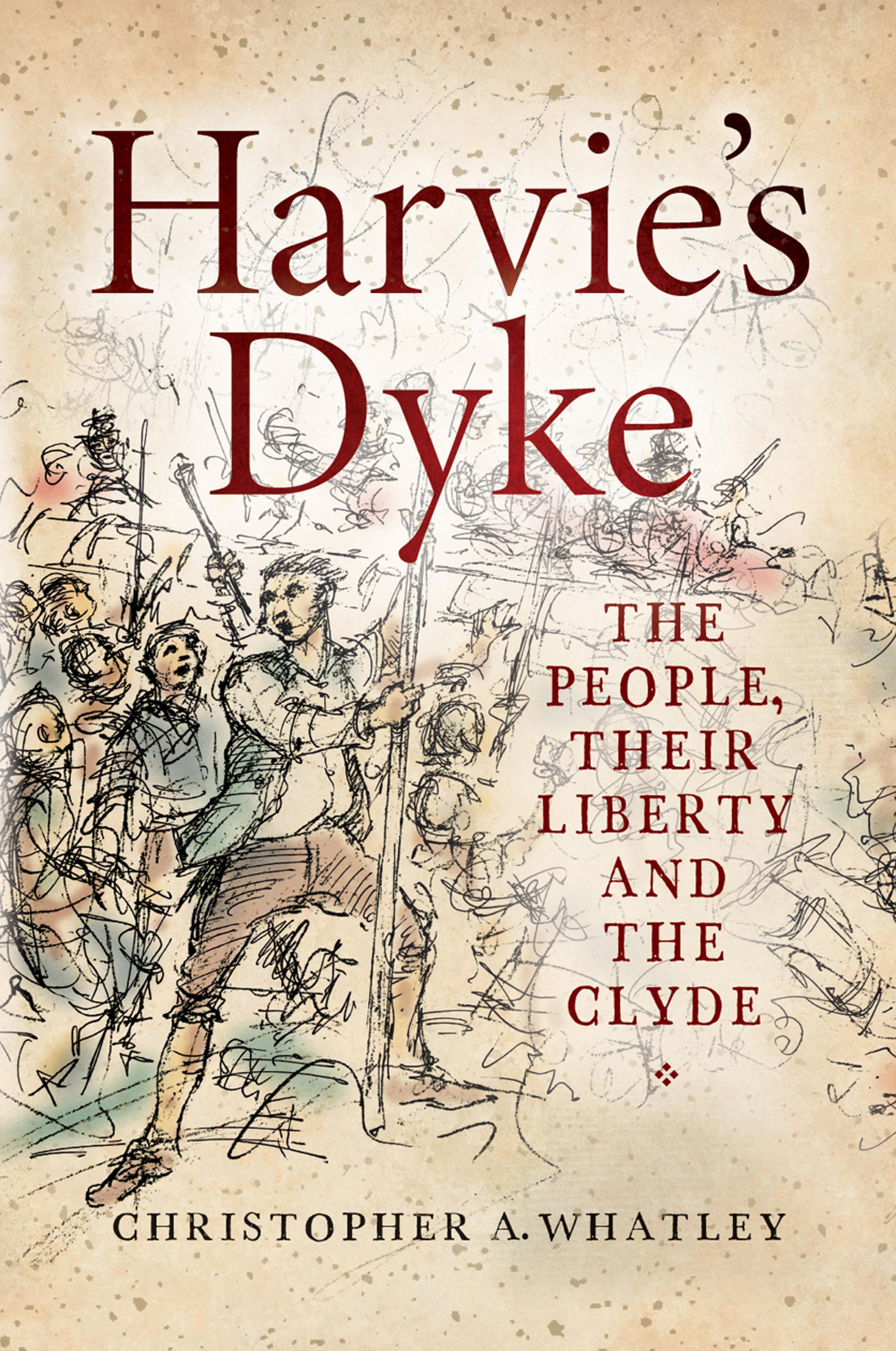
In the early 1820s, Thomas Harvie, a newly rich, arrogant Glasgow distiller, bought Westthorn estate on the eastern edge of the city close to the north bank of the River Clyde. To establish the bounds of his property and keep out intruders, he erected two walls, the larger of which ('Harvie's Dyke') was massive, fortified and blocked a long-established pathway alongside the river. Colliers and other workers from nearby villages (many of whom regularly used the walkway) were outraged. A large crowd gathered on midsummer's evening in 1823 and set about demolishing the wall. After a cavalry charge put an end to the disturbance, dozens of the rioters were arrested and some imprisoned.
But Harvie rebuilt his walls, and a six-year struggle with the people of Glasgow ensued, which resulted in a House of Lords ruling in 1828 in favour of those who had campaigned for 'the liberties of the banks of the Clyde'. The episode gripped the city and was heralded in poems, song and newspapers for many decades. It also inspired later protests against landowners who attempted to obstruct public rights of way. This book is testimony to a triumphant victory for ordinary Glaswegians over an uncompromising estate proprietor.
Christopher A. Whatley OBE, FRSE is Emeritus Professor of Scottish History at the University of Dundee. Initially an historian of the coal and salt industries, and of Scottish industrialisation, he has since written on Scotland's everyday life, urban society, popular protest, riot and disorder, the causes and consequences of the Union of 1707, memorialisation, and Scottish writers including Robert Burns and his legacy, and John Galt.
'Whatley's book is both timely and welcome and I whole-heartedly commend it to everyone interested in public access and social history'
'Highly recommended both for its story and the significance of the story's outcome, but also as an example of thorough research and clear writing'
Versandkostenfreie Lieferung! (eBook-Download)
Als Sofort-Download verfügbar
- Artikel-Nr.: SW9781788858328110164
Bewerten
Ein Blick ins Buch
- Artikelnummer SW9781788858328110164
-
Autor
Christopher A. Whatley
- Wasserzeichen ja
- Verlag John Donald
- Seitenzahl 256
- Barrierefreiheit
- ISBN 9781788858328