
Beam Shop
Invisible Ancestor
The Galloway Nag and its Legacy
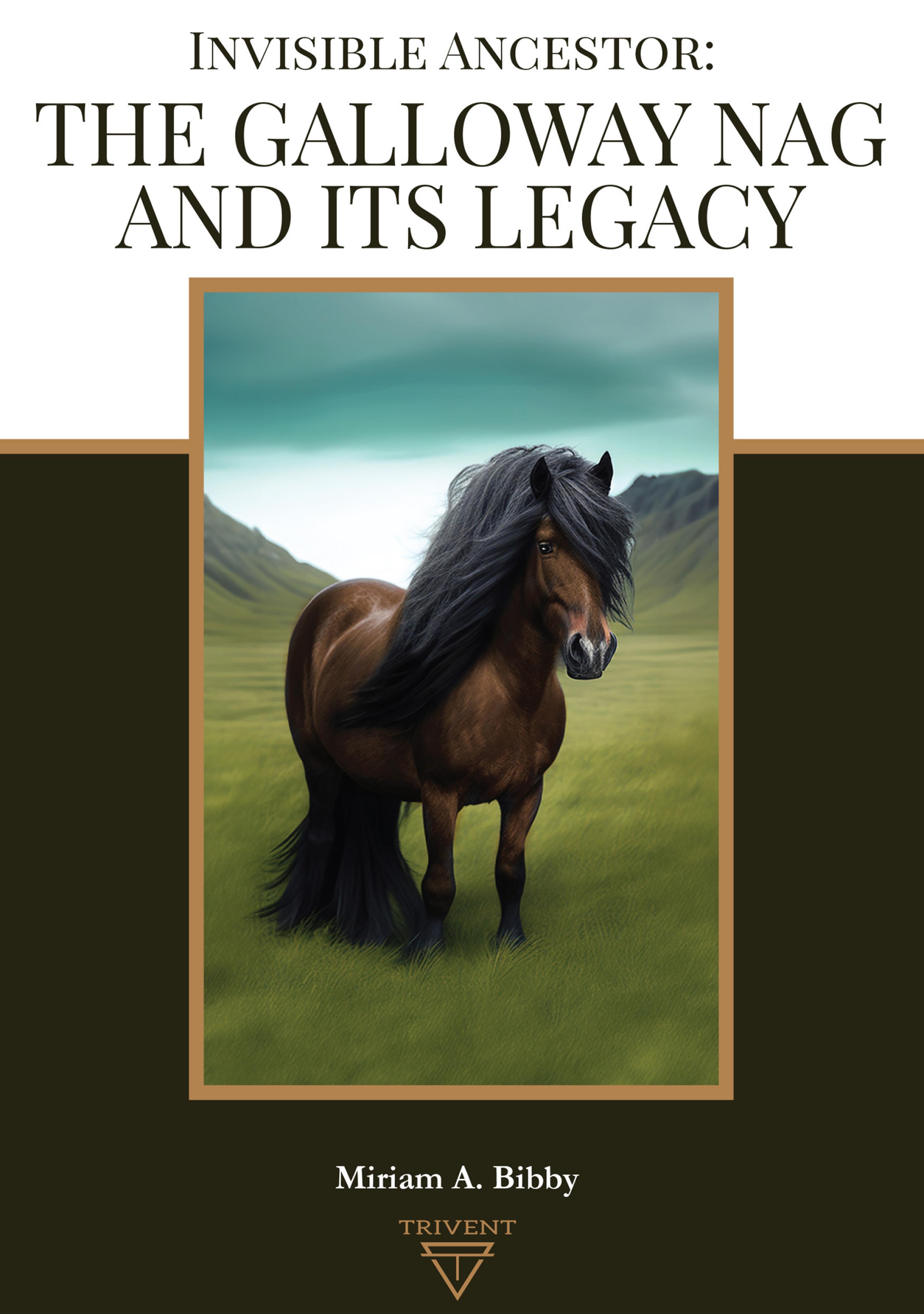
The outstanding qualities of the Galloway horse landrace are referenced in literary sources from the late sixteenth century onwards. Brief, but eloquent and revealing allusions appear in the work of William Shakespeare, Thomas Dekker, Ben Jonson, and other writers with connections to the Tudor, Stuart, Caroline, and Carolean courts. The Galloway nag was sufficiently influential for its name to become a generic widely applied to small horses of a certain type: speedy, enduring, and reliable. This is still the case in the north of England and Australia, where the terms "Gallowa" and "Galloway" continue to be used today. The Galloway contributed to a surprising number of modern horse breeds, including the Thoroughbred, yet few people are aware of its influence. Miriam A. Bibby shows how and why its contribution has been overwritten by other narratives. In doing so, she also reveals previously unexplored sources that indicate the complex role played by the imagined Galloway in Anglo-Scottish relations. Collectively these represent a unique new genre of commentary that she identifies as "Galloway Nag Satire." This is the first major study devoted to the history of the Galloway horse.
Miriam A. Bibby is an archaeologist and historian specialising in the history of the horse, particularly the horse in northern England and Scotland. She is currently engaged in specialist research at the University of Glasgow into the history and influence of the Galloway horse. Miriam was formerly a tutor, year convenor and course developer for the University of Manchester's networked learning course in Egyptology. While at Manchester, she gained her M.Phil. on the topic of the horse in ancient Egypt and in 2000 she founded Ancient Egypt magazine. She has presented at numerous conferences and her work has been published in many journals and magazines. Miriam has also worked as a museum curator and in heritage management. Brian G. Scott is the former Keeper of Conservation at the Ulster Museum, Belfast. He has written extensively on early metallurgy, with special emphasis on iron and steel, and is also a specialist on Irish Later Bronze Age equitation, as well as on early artillery, having published the definitive studies of the late-sixteenth and seventeenth centuries cannon in the City of Derry~Londonderry and on the mortar campaign during the 1689 Siege.
Maps & Illustrations Acknowledgements Introduction. A Beautiful Breed of Little Horses PART I. TRACKING THE GALLOWAY: ORIGINS AND INFLUENCE Chapter 1. Horses from the Margin Chapter 2. The Galloway as the Best Breed in the North PART II. "AND ALL THEIR NAGS ARE PRESBYTERIAN": THE GALLOWAY, THE STUARTS, AND THE HAMILTONS Chapter 3. Satirical Nag: The Galloway from the Union of the Crowns to the Restoration Chapter 4. The Galloway Nag from Restoration to Culloden (And Its Aftermath) PART III. BLACK SWAN: CHANGING TIMES, CHANGING GALLOWAYS Chapter 5. Our Racing Friends in the North Chapter 6. Industrial Interlude: Working Class Hero Chapter 7. Arab or Arabian? The Rise of the Orientalist "Arabian" Horse PART IV. NO FRIENDS IN HIGH PLACES: EXIT THE GALLOWAY Chapter 8. Blood, Breeding, and the Byron-Milbanke Marriage Chapter 9. Annabella Milbanke's Nose Chapter 10. "The Common Blood of Which We Are Trying to Rid Ourselves" Chapter 11. Heat, and Finally Light: Pseudo-Science and Science inthe Search for Thoroughbred Origins Chapter 12. Idle Sentiment Conclusion. Nothing Now Remains but the Name Appendices Bibliography
Versandkostenfreie Lieferung! (eBook-Download)
Als Sofort-Download verfügbar
- Artikel-Nr.: SW9786156696168110164
Bewerten
Ein Blick ins Buch
- Artikelnummer SW9786156696168110164
-
Autor
Miriam A. Bibby
- Verlag Trivent Publishing
- Seitenzahl 560
- Barrierefreiheit
- ISBN 9786156696168