
Beam Shop
Eyes, Mind and Vision
Visual Realities and Metaphors in Psychoanalysis
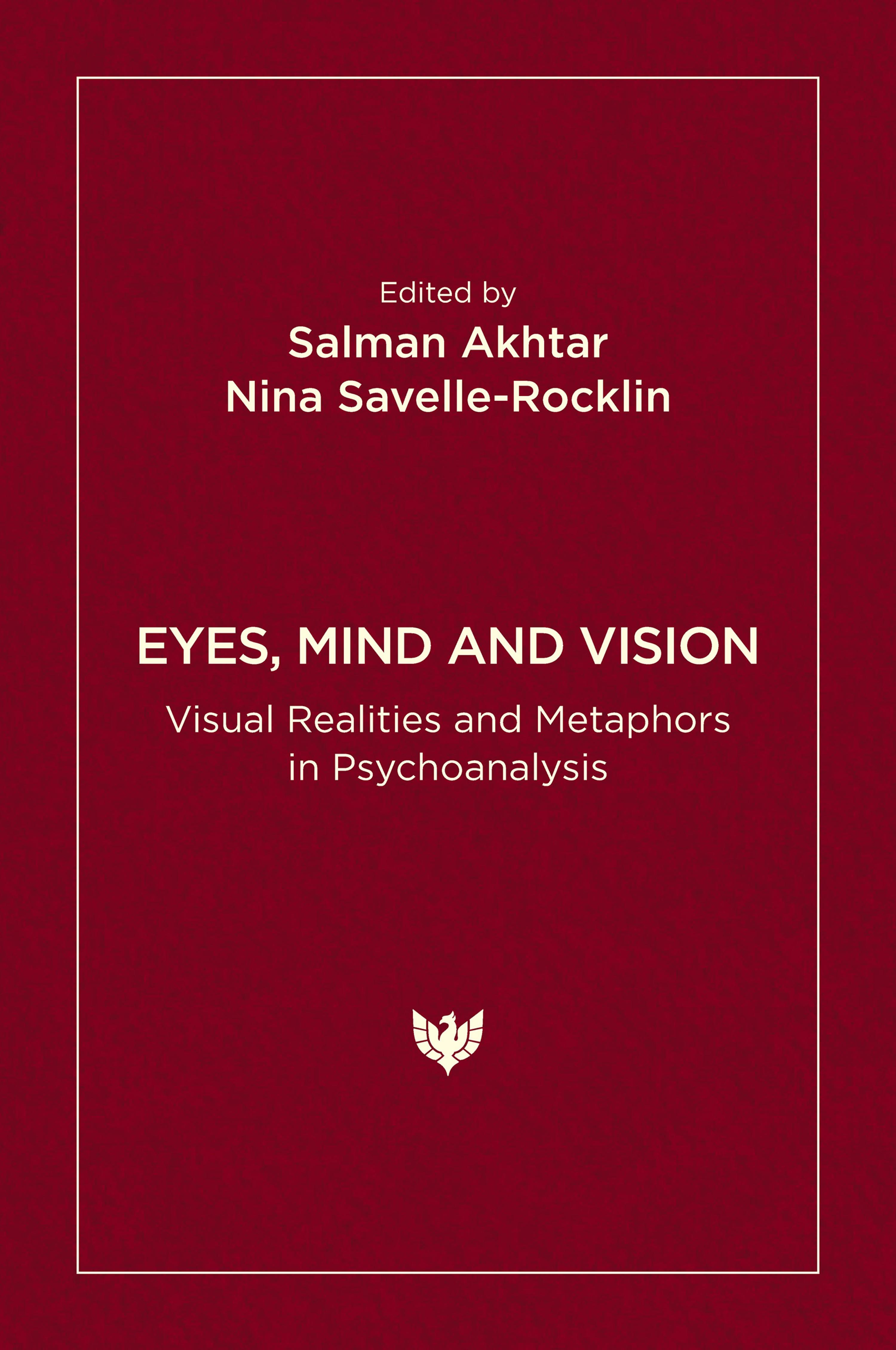
This pioneering work introduces the concept of psychoanalytic ophthalmology with chapters from Salman Akhtar, Suzanne Benser, Cemile Serin Gürdal, Richard K. Hertel, Alan Michael Karbelnig, Nilofer Kaul, Toni Mandelbaum, Anneliese Riess, Nina Savelle-Rocklin, Brian Watermeyer, and Thomas Wolman.
Eyes play a role in a number of diverse psychopathologies, including hallucinations, blindness, voyeurism, and the feeling of being invisible or, conversely, under constant surveillance. Yet, vision is more than mere physical sight. There exist cultural notions, such as the "evil eye" and the mythic self-blinding of Oedipus, and the actions of seeing, looking, and watching (and the passive being seen, being looked at, being watched) play a huge part in childhood psychological development and adult psychosocial functioning. Our ocular experience begins with the maternal gaze and the eye-to-eye contact of mother and infant, which moves on to the ubiquitous "peek-a-boo" game, young children shouting "look at me!", adolescents torn between wanting to be seen and to be invisible, the locked eyes of adult lovers, and so much more. Eyes can express respect or contempt, love or hate; they are called the windows to the soul. This collection of inspiring papers brings a much-needed focus on their varied and multi-layered role in our physical and mental lives and their continuing and overlooked importance in psychoanalytic theory and practice. This enjoyable book is ideal reading for academics and clinicians.
Salman Akhtar, MD, is Professor of Psychiatry at Jefferson Medical College and a Training and Supervising Analyst at the Psychoanalytic Center of Philadelphia. He has served on the editorial boards of the International Journal of Psychoanalysis, the Journal of the American Psychoanalytic Association, and the Psychoanalytic Quarterly. His more than 450 publications include 120 books, of which the following twenty-three are solo-authored: Broken Structures (1992), Quest for Answers (1995), Inner Torment (1999), Immigration and Identity (1999), New Clinical Realms (2003), Objects of Our Desire (2005), Regarding Others (2007), Turning Points in Dynamic Psychotherapy (2009), The Damaged Core (2009), Comprehensive Dictionary of Psychoanalysis (2009), Immigration and Acculturation (2011), Matters of Life and Death (2011), The Book of Emotions (2012), Psychoanalytic Listening (2013), Good Stuff (2013), Sources of Suffering (2014), No Holds Barred (2016), A Web of Sorrow (2017), Mind, Culture, and Global Unrest (2018), Silent Virtues (2019), Tales of Transformation (2021), In Leaps and Bounds (2022), In Short (2024).
Dr Akhtar has delivered many prestigious invited lectures including a Plenary Address at the 2nd International Congress of the International Society for the Study of Personality Disorders in Oslo, Norway (1991), an Invited Plenary Paper at the 2nd International Margaret S. Mahler Symposium in Cologne, Germany (1993), an Invited Plenary Paper at the Rencontre Franco-Americaine de Psychanalyse meeting in Paris, France (1994), a Keynote Address at the 43rd IPA Congress in Rio de Janiero, Brazil (2005), the Plenary Address at the 150th Freud Birthday Celebration sponsored by the Dutch Psychoanalytic Society and the Embassy of Austria in Leiden, Holland (2006), the Inaugural Address at the first IPA-Asia Congress in Beijing, China (2010), and the Plenary Address at the Fall Meetings of the American Psychoanalytic Association in 2017.
Dr Akhtar is the recipient of numerous awards including the American Psychoanalytic Association's Edith Sabshin Award (2000), Columbia University's Robert Liebert Award for Distinguished Contributions to Applied Psychoanalysis (2004), the American Psychiatric Association's Kun Po Soo Award (2004) and Irma Bland Award for being the Outstanding Teacher of Psychiatric Residents in the country (2005). He received the highly prestigious Sigourney Award (2012) for distinguished contributions to psychoanalysis. In 2103, he gave the Commencement Address at graduation ceremonies of the Smith College School of Social Work in Northampton, MA.
Dr Akhtar's books have been translated in many languages, including German, Italian, Korean, Romanian, Serbian, Spanish, and Turkish. A true Renaissance man, Dr Akhtar has served as the Film Review Editor for the International Journal of Psychoanalysis, and is currently serving as the Book Review Editor for the International Journal of Applied Psychoanalytic Studies. He has published 11 collections of poetry and serves as a Scholar-in-Residence at the Inter-Act Theatre Company in Philadelphia.
Nina Savelle-Rocklin, Nina Savelle-Rocklin is a psychoanalyst, author, and podcast host. She is the author of Food for Thought: Perspectives on Eating Disorders (Rowman & Littlefield) and co-editor (with Salman Akhtar) of Beyond the Primal Addiction (Karnac Books) and Food Matters: A Biopsychosocial Approach (Karnac Books). She also wrote The Binge Cure: 7 Steps to Outsmart Emotional Eating and its companion workbook, The Binge Cure Journal, as well as Beyond Binge Eating: 100 Powerful Reflections to Transform Your Relationship with Food. Dr.
Acknowledgments
About the editors and contributors
Introduction
Prologue
1. The mother's eye
Anneliese Riess
Part I: Developmental Realm
2. Vision, attachment, and the development of the self
Toni Mandelbaum
3. Primal scene and other cocreated "wild things"
Cemile Serin Gürdal
Part II: Cultural Realm
4. The spectrum of sight in literary and psychoanalytic narratives
Nilofer Kaul
5. Psychoanalytic aspects of blindness as depicted in three Hollywood films
Thomas Wolman
6. The lethal psychic blindness about global warming and nuclear threat
Alan Michael Karbelnig
Part III: Clinical Realm
7. Blindness, psychoanalysis, and the denial of our shared human condition
Brian Watermeyer
8. The impact of childhood visual difficulties on adult psychic functioning
Richard K. Hertel
9. On feeling watched
Nina Savelle-Rocklin
10. Voyeurism
Salman Akhtar
Epilogue
11. The analyst's eye
Suzanne Benser
References
Index
Versandkostenfreie Lieferung! (eBook-Download)
Als Sofort-Download verfügbar
- Artikel-Nr.: SW9781800134171110164
Bewerten
Ein Blick ins Buch
- Artikelnummer SW9781800134171110164
-
Mit
Salman Akhtar, Nina Savelle-Rocklin
- Verlag Karnac Books
- Seitenzahl 446
- Barrierefreiheit
- ISBN 9781800134171
- Verlag Karnac Books