
Beam Shop
Postcolonial Romance
Negotiations of Modernity in the Novels of Amitav Ghosh and Kamila Shamsie
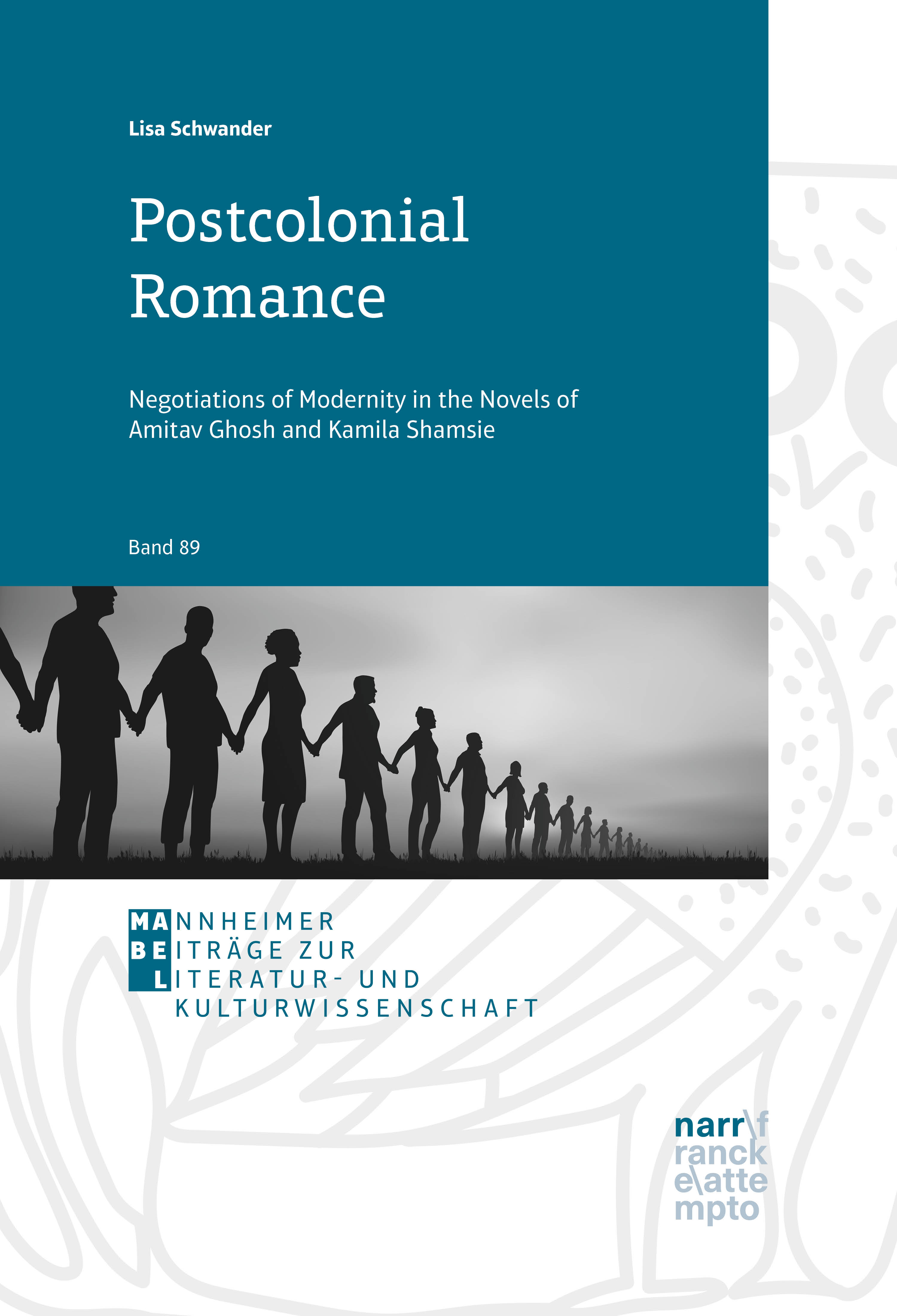
At first glance, postcolonialism and romance seem worlds apart: the former associated with political critique and activism, the latter with idealisation and escapism. In discussing selected novels of Amitav Ghosh and Kamila Shamsie, this study unsettles this assumption. Through reading both authors' texts against the backdrop of the 19th- and early 20th-century historical and imperial romance, it shows how contemporary fiction employs romance conventions to critically engage with history. Far from being apolitical, romance in the novels of Ghosh and Shamsie becomes a tool for rethinking modernity and for envisioning alternative futures disentangled from the colonial past.
Lisa Schwander hat am Lehrstuhl für Anglistische Literatur- und Kulturwissenschaft der Universität Mannheim gelehrt und promoviert.
1 Introduction
2 Modernity and Postcolonial Romance: Preliminary Remarks
2.1 Reconceptualising and Transforming Modernity: Modernity as a Transcultural Phenomenon
2.1.1 A Transcultural Understanding of Modernity as a Political Intervention: Two Versions
2.1.2 Towards a Cosmopolitan Paradigm
2.2 From Exotic Romance to Postcolonial Romance
2.2.1 Exotic Romance and the Modern Versus Anti-Modern
Imagination
2.2.2 Exotic Romance, Alternative 'Conceptual Realities' and Cosmopolitan Visions
2.2.3 Ghosh's and Shamsie's Versions of Postcolonial Romance: An Outline
3 Transcending the Borders of 'the Modern': Romance in the Novels of Amitav Ghosh
3.1 Western Modernity's Global Triumph: The Ibis Trilogy (2008-15) and the Historical Romance Tradition
3.1.1 The Trilogy's Divided World
3.1.2 The Narrative of 'Modernisation'
3.1.2.1 ... But Where Exactly is the Anti-Modern? The Battle
Between the 'New' and the 'Old' World Reconsidered
3.1.2.2 'Re-Made in a More Enlightened Mould': Character
Development and the Idea of a Modernising World
3.1.3 The Romance Realm: (Western) Modernity's Banned 'Other'
3.1.3.1 Beyond the Borders and Boundaries of 'the Modern'
3.1.3.2 The Ibis Community: A Continuation along the Indian
Ocean Lines
3.1.4 The Trilogy's Outlook: Modernity as a 'Train Headed
for Disaster'
3.2 The Other World of the Sundarbans: The Hungry Tide (2004) and the Imperial Romance Tradition
3.2.1 Travelling to a Pre-Modern Place? The 'Denial of
Coevalness' in Postcolonial India
3.2.2 A World of Boundaries Versus Its Romance Alternative
3.2.3 Beyond Exotic Romance and Notions of a Divided
World
4 Romance, Interconnected Histories and a Future Beyond Divisions in Kamila Shamsie's Novels
4.1 Replacing Exotic Romance with Transcultural Romance: A God in Every Stone (2014)
4.1.1 Deconstructing Exotic Romance - Rejecting
Imaginaries of Division
4.1.1.1 A World 'Apart': an Imperial Fantasy
4.1.1.2 From Seeing a Connected World to Becoming Involved
4.1.1.3 Rethinking Global Feminism: Towards a Transcultural Solidarity
4.1.2 Transcultural Romance and Shamsie's Revisionist
History
4.2 Visions for a World at Peace: The Troubled Romance Plots of Burnt Shadows (2009) and Kartography (2002)
4.2.1 Against Classifications: Romance in Burnt Shadows
4.2.1.1 The 'Ghost of Konrad Weiss': Transcultural Romance and Cosmopolitan Lifeworlds
4.2.1.2 Endangered Romance: Romance Versus the Logic of Typification
4.2.2 Kartography's Romance of Connections
4.2.2.1 Two Love Stories and the Hope for a Reconciled
Pakistan
4.2.2.2 (Un)seeing Connections and the Motif of the Barrier: Politicising Genre Conventions
4.2.2.3 Beyond a National Tale: Connecting karachi and Connecting the World
5 From Alternative Visions to Alternative Worlds: Postcolonial Romance in Context
6 Bibliography
Versandkostenfreie Lieferung! (eBook-Download)
Als Sofort-Download verfügbar
- Artikel-Nr.: SW9783381151134110164
Bewerten
Ein Blick ins Buch
- Artikelnummer SW9783381151134110164
-
Verlag
Narr Francke Attempto Verlag
- ISBN 9783381151134