
Beam Shop
Natural climate changes
Facts based on Geological, Archaeological and Astrophysical Aspects
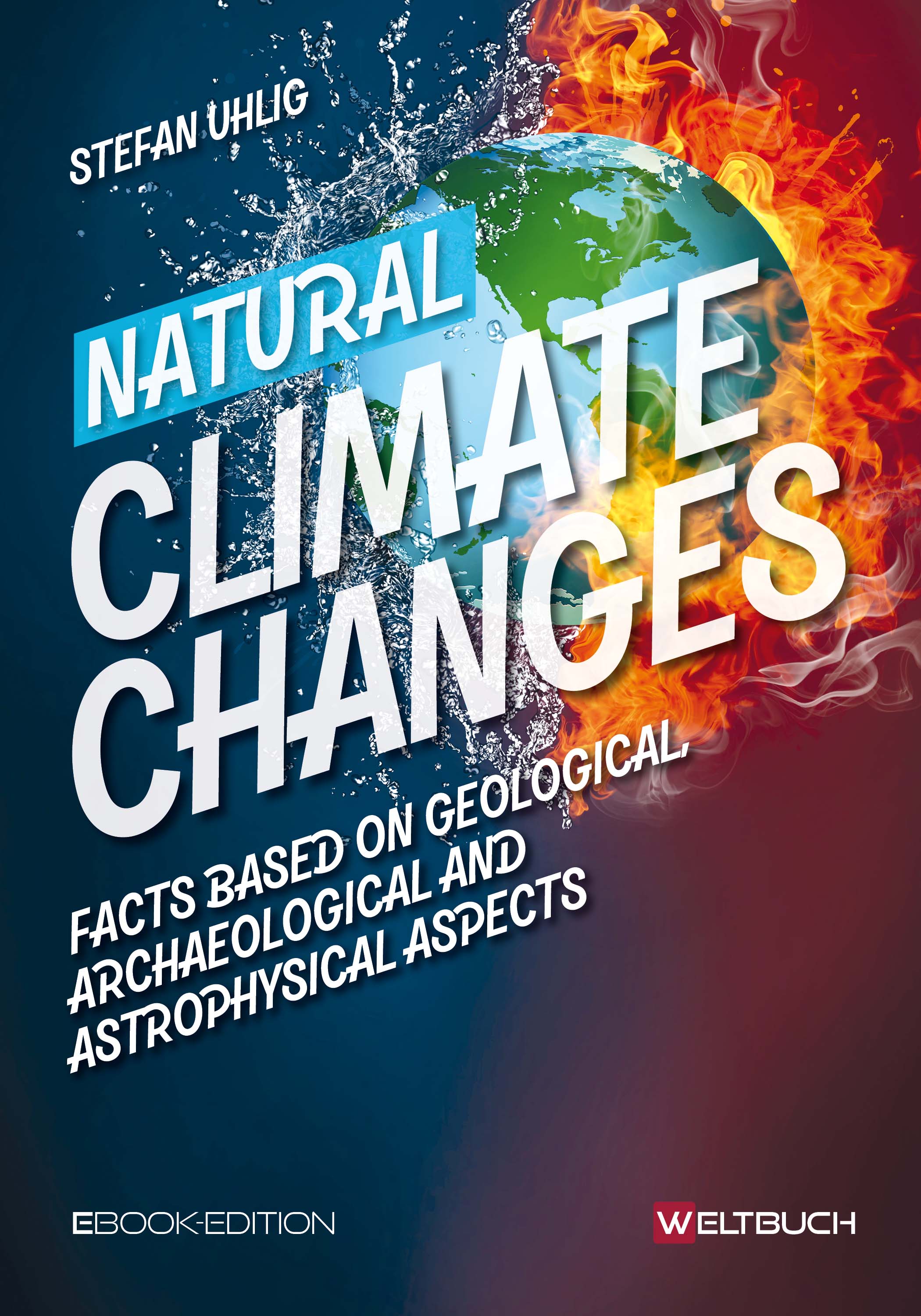
In times of the European Medieval, the powerful contemporaries and influencers propagated the geocentric model of the world according to which the Earth should have been located in the centre of the Universe and the Sun and the planets should have circumnavigated the Earth. A modern analogue is the current superstition that the human is provoking and can control the climate change by the anthropogenic emission of carbon dioxide.
This book presents examples of continuous natural climate changes, such as the development of the temperature of Earth's atmosphere, the oceans' sea levels and the ice volumes of the last few millions of years. These are explained and discussed, presenting data from different scientific areas such as geosciences, archaeology and astrophysics.
Hereby, we will see that quite complex astrophysical and heliophysical mechanisms cause the periodically recurring long- and short-term variation of climate which cannot be influenced at all by any human being, also not by any increased or reduced emission of anthropogenic carbon dioxide. Controlled by the Sun's energy reaching the Earth's surface, the oceans are the global player interacting with the atmosphere and dominating its temperature.
It was intended to write this book in an understandable style for everybody interested to learn more about the controversially discussed topic of climate change, or who is affected by the drastic measures of policy and want to form their own opinion. On the other hand this publication wants also to be a compact base and reference for the scientific young generation to invite them to immerse themselves into this very interesting and exciting field of natural sciences.
Dr. rer nat. Dipl. Geol. Stefan Uhlig graduated in geosciences at the Technical University of Karlsruhe (Germany), specialising in applied geology and geochemistry. He worked in mining in Spain and in geoscientific projects in Mexico and Southern Africa, as well as in deep drilling projects on- and offshore. The field work for his dissertation on stratiform copper mineralisation was realised in Namibia, where he cooperated with the local Geological Survey. Later, he worked in the field of X-ray analysis, which took him again to Latin America and to Southern Africa, among other places. He now makes his scientific findings, knowledge and experience accessible to a wider readership focusing on the late-breaking discussion on climate change.
Introduction
1. Climate – What is it?
2. Alternating Cold and Warm Periods
3. The Earth's Position in the Solar System
4. The Pulsating Sun
5. The Blue Planet – without Oceans, Climate would be different
6. The Climate and Us – not Us and the Climate!
7. Extreme Weather Phenomena
8. The Rise and Fall of Sea Level
9. The Advance and Retreat Movement of Glaciers
10. Greenhouse Effects and Gases
11. CO2 Regimes of the Past
12. The Cold Side of Volcanoes
13. What Happened to the Ozone Hole?
14. About Polar Bears and Rhinos
15. Sideshow of Small Particles
16. Climate – Quo Vadis?
Concluding Remarks
Bibliography
About the author
I don't believe everything the climate evangelists write, nor everything the climate deniers spout. To form your own opinion, you should listen to both sides. In my view, this book is very well researched and presented from a scientific perspective. It provides plenty of food for thought. I would definitely recommend it.
The Earth's climate has never been constant. This book is aimed at anyone who wants to understand the basics of climate change. It is easy to understand for those with an interest in science. The book deals with climate change that has occurred spontaneously, without human intervention, over the last centuries, millennia and millions of years. The scientific facts reveal how the climate has either promoted or hindered the development of the Earth, the entire biosphere and, consequently, human history. The chapter on CO2, carbon dioxide, in comparison with H2O, water, water vapour, liquid water, ice, clouds and oceans is also fascinating. It is easy to understand the enormous contribution water makes to normal climate change. The influence of fluctuations in solar radiation on historical climate change is also discussed in detail.
The book is well worth reading. Pre-industrial—and therefore natural—climate change is often ignored or dismissed as irrelevant in many works on climate change, which makes it difficult to engage with the subject objectively. Merely attempting to approach the topic with an open mind often leads to one being discredited. Against this backdrop, a side note: so far, the positive reviews of the book have come from 'verified buyers', whilst the scathing critique of its content has come from an author not verified as a buyer – something which, unfortunately, is frequently observed in this ideologically charged field.
Versandkostenfreie Lieferung! (eBook-Download)
Als Sofort-Download verfügbar
- Artikel-Nr.: SW9783907347669110164
Bewerten
Ein Blick ins Buch
- Artikelnummer SW9783907347669110164
-
Verlag
Weltbuch Verlag
- ISBN 9783907347669