
Beam Shop
Eagle's Nest
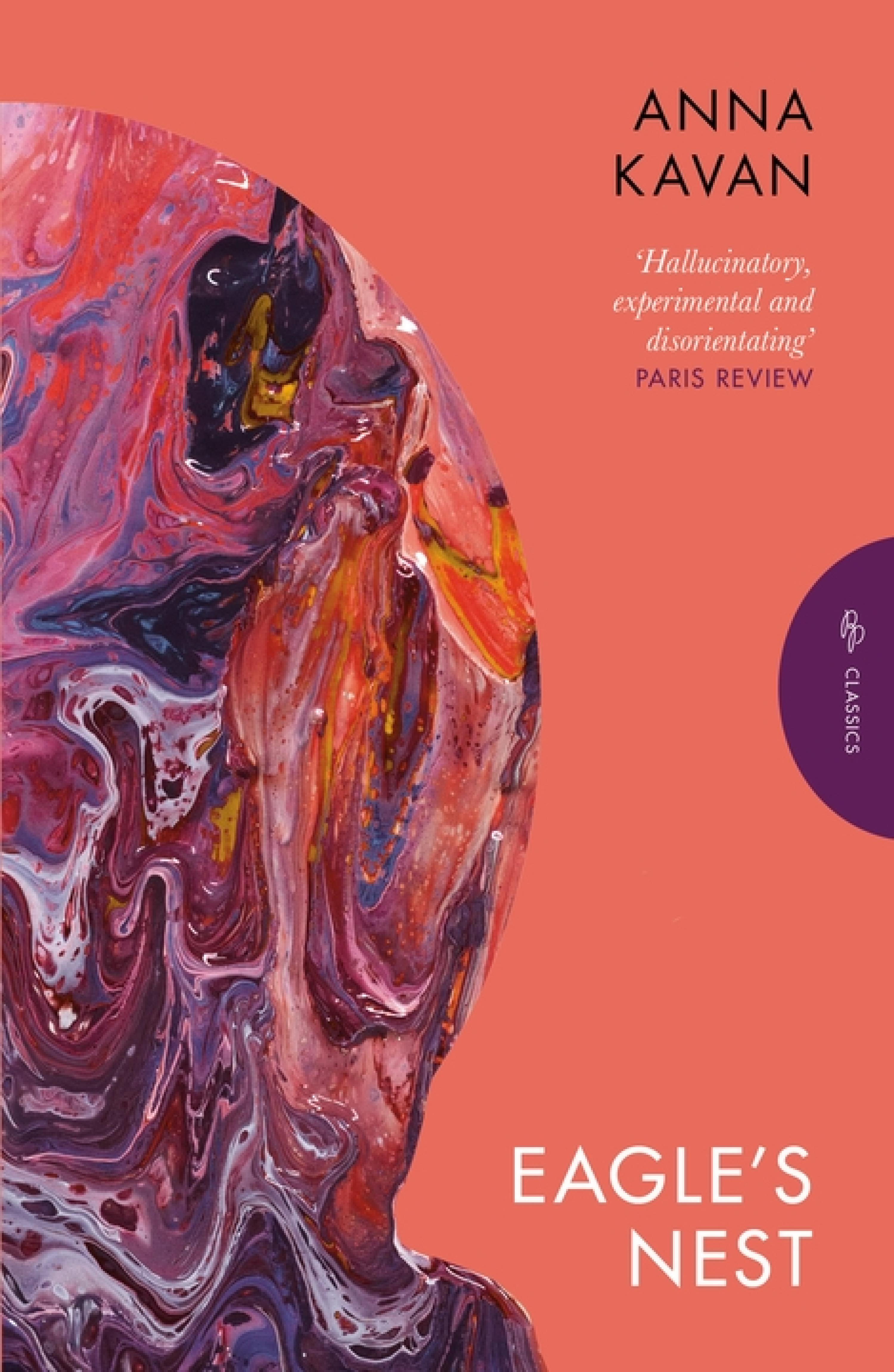
A painter is working in creative isolation, under factory conditions amid a crowd of vapid typists. On discovering a note praising his work and inviting him to meet a mysterious Administrator, he decides to abandon his post and follow this lead to the remote mansion at Eagle's Nest. In this castle-like outpost, he meets blank-faced employees and wanders through networks of strange halls, yet the Administrator remains elusive and the painter's grip on reality grows ever shakier. As unsettling and paranoiac as Kafka's masterpiece The Castle, Kavan's fourth novel remains distinctively her own: a study of obsessive alienation in vertiginously beautiful prose.
Anna Kavan (1901-1968) was born Helen Woods, the only child of wealthy British expatriates, and grew up travelling through Europe and America. She began publishing under her married name, Helen Ferguson, having left her husband in Burma and returned with her son to live in England. After a mental breakdown in the 1930s she began writing under a new name, taken from one of her characters, and with a new style. She continued writing for another three decades, while frequently using heroin and undergoing several rounds of psychiatric hospitalisation. She died shortly after the publication of Ice, her most celebrated work.
'Her preoccupations - opioid addiction, extreme weather, female oppression, psychopathology - have become topics of burning interest. And a growing appetite for expressionist techniques and hybrid forms-and for a submerged tradition of postwar English modernism - suggests that literary culture is on her side.'
'Kavan has built a cult following, with all that phrase implies. Her fans, who have included Anaïs Nin, Jean Rhys, Doris Lessing, J.G. Ballard, Jonathan Lethem, and Patti Smith, are scarce yet passionate. "Few novelists," declared Ballard, "match the intensity of her vision."'
'Eagle's Nest (1957) has been called Kavan's most Kafkaesque work, further developing her concept of a "second secret existence," a real world with an underworld percolating beneath. ... Kavan only received true recognition for her genius a year before her death, with the success of Ice.'
'De Quincey's heir and Kafka's sister.'
'Anna Kavan explored the nocturnal worlds of our dreams, fantasies, imagination, and nonreason.'
In Eagles Nest (1957), a luckless paranoiac takes a train from a city in the "grip of an iron frost" to a place under a "blazing sun" where everything was "arid, inhuman, enormous and elemental, like a scene from some earlier stage of the planet's long life."In this new authorial persona, Kavan committed fully to the literary style only nascent in her previous work: hallucinatory, experimental, steeped in doom, and with a disorientating quality made all the more forceful by diamond-etched prose and supreme narrative control and concision....'Astonishingly avant-garde even to the contemporary reader, Kavan knew that what she called "my sort of experimental writing" had narrow appeal, but she wasn't interested in conforming to popular taste. Despite criticism and rejection, she remained uncompromising in her creative vision.'for this most imaginative and otherworldly of writers, whose plots seamlessly merge fantasy and reality, past and future, life and death, nothing could be more apt than a cross-century literary resurrection.
Versandkostenfreie Lieferung! (eBook-Download)
Vorbestellerartikel: Dieser Artikel erscheint am 14. Januar 2027
- Artikel-Nr.: SW9781782697282110164
Bewerten
Ein Blick ins Buch
- Artikelnummer SW9781782697282110164
-
Autor
Anna Kavan
- Verlag Pushkin Press Classics
- Seitenzahl 192
- Veröffentlichung 14.01.2027
- Barrierefreiheit
- ISBN 9781782697282
- Verlag Pushkin Press Classics