
Beam Shop
Sustainability and Intergenerational Justice
What About the Children?
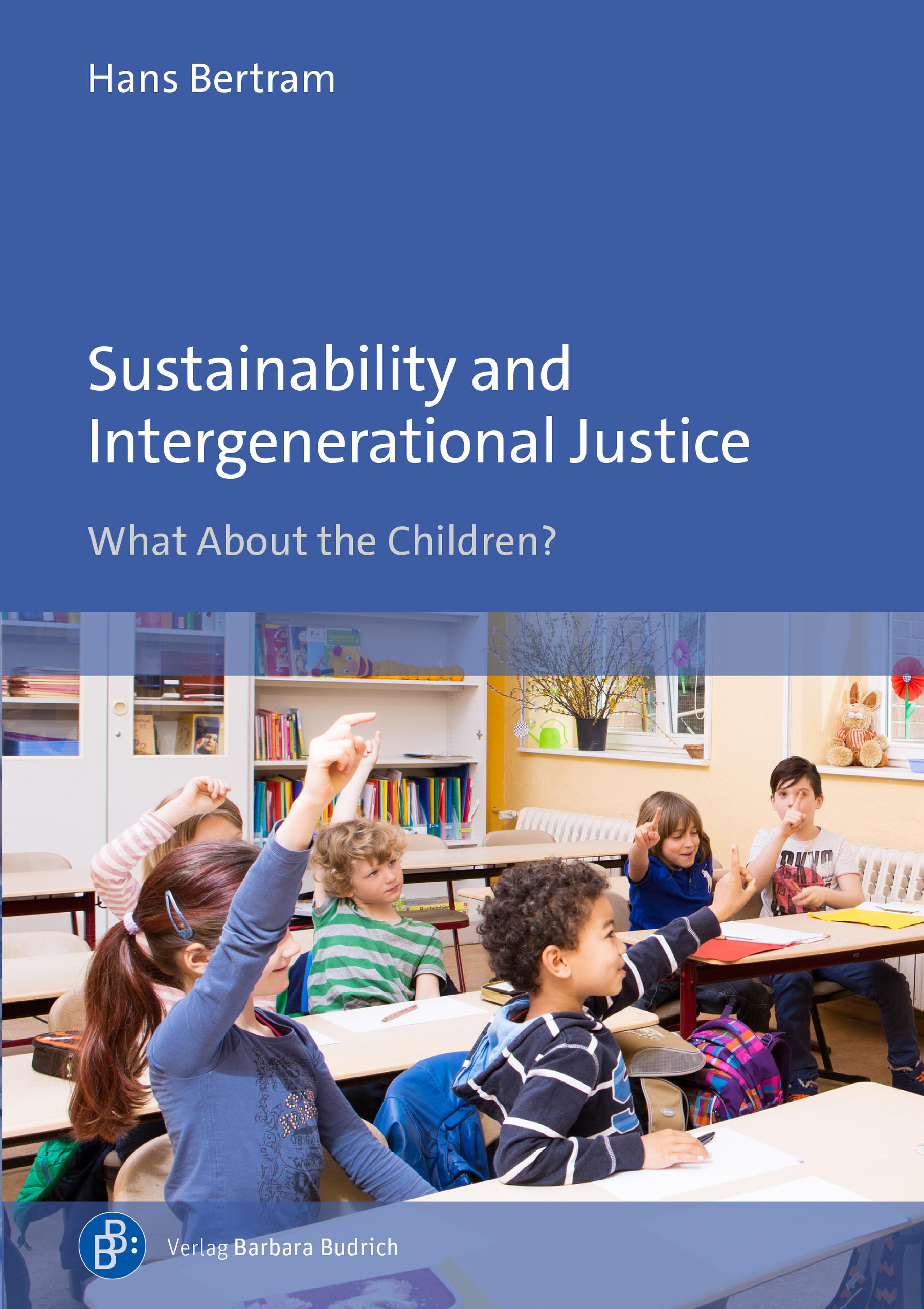
Ohne Nachhaltigkeit und Generationengerechtigkeit werden die Kinder von heute nicht mehr die Chance haben, ihr Leben so zu gestalten wie ihre Eltern. Bildungsgerechtigkeit, Armutsbekämpfung, Gesundheit und Sicherheit von Kindern, Gleichstellung der Geschlechter sowie Klimaschutz sind entscheidende Bestandteile einer nachhaltigen und generationengerechten Politik. Die Grundannahme dieses Buches ist, dass die Bedürfnisse der heutigen Generation von Kindern in diesen Politikfeldern nicht berücksichtigt werden, was zur Folge hat, dass die bereits bestehenden Ungleichheiten und Ungerechtigkeiten zunehmen werden.
1 Generational justice, sustainability, and ethical values
2 The forgotten children
2.1 Demographic facts
2.2 The forgotten children and the lack of investment
2.3 Parents: competition, compensation, or partnership
2.4 Social inequality and mathematical skills
2.5 Economic deprivation – economic capital
2.6 Social deprivation – social capital
2.7 Cultural deprivation – cultural capital
2.8 From school to youth welfare
2.9 An integrative perspective
3 Germany, nation of education in decline
3.1 Policy or theoretical failure: the problems with compensation theory
3.2 Intergenerational justice and sustainable education
4 Poor children in a rich country
4.1 Material poverty and the economic independence of mothers
4.2 Work, poverty, social exclusion
4.3 Child deprivation
5 Overcoming poverty: dual-income families, inclusion through work, overcoming deprivation
5.1 From universal poverty reduction to tackling specific causes
5.2 Poverty, work, and social exclusion
5.3 Poverty, work, and deprivation
5.4 The triad of poverty reduction as intergenerational justice
6 Healthy life: a country without confidence?
6.1 Healthy life, life expectancy, working life, and life satisfaction
6.2 The black sheep: the coronavirus pandemic, a brief digression on excess mortality and the effects of the pandemic on children
6.3 Healthy living: sustainable lifestyles and reduction of life risks
6.4 Sustainable health policy instead of ageism
7 A peaceful, just, and inclusive society
7.1 Respect at school and in the family: the heterogeneity of pupils
7.2 Respect in school and family: The heterogeneity of families
7.3 Subjective and actual safety
7.4 Family, children, and the state
7.5 Looking together
7.6 Youth welfare and schools: on the way to a village
8 Sustainability, gender equality, and the gender paradox
8.1 Equality of results or equality of opportunity
8.2 Equal opportunities: Privileging the privileged
8.3 Equal opportunities: Homo economicus, preferences, and individuality costs
9 Responsibility postponed: the burden of future generations
9.1 Rational fools in climate policy: Why incentives alone are not enough
9.2 Technology instead of sacrifice: a more realistic model for sustainability
9.3 Climate policy and neocolonialism: Who bears the burden of climate change?
9.4 Climate showdown: technology versus equality
9.5 From a national to a systemic climate policy
10 More appearance than substance? Paradoxical developments in education, poverty, health, security, equality, and climate
10.1 A divided society or intergenerational justice
10.1.1 Academics instead of workers: from the coal and steel industry to the service society
10.1.2 Neoliberal poverty rate, forgotten deprivation, and participation
10.2 Quality of life and security
10.2.1 The years gained: gain or loss?
10.2.2 Security: Lack of commitment in the welfare state
10.3 Equality and structural disadvantage
10.3.1 Three phases, many hurdles: the life course as a barrier to equality
10.3.2 The strong get stronger, the weak fall behind: the equality paradox
10.3.3 The three-part life course: the structural disadvantage of women
10.4 Climate policy and sustainability
10.4.1 From good intentions to good results: generational justice at the heart of honest climate policy
10.4.2 Fluctuating electricity instead of base load: Merkel’s headless energy transition
10.4.3 The natural gas trap: the example of Great Britain
10.4.4 Ideology instead of efficiency? The blind spots of the net-zero strategy
10.4.5 For a fair future: invest now – don’t wait until the price rises
10.4.6 Alternative climate policy: efficiency, storage, global cooperation
11 Intergenerational justice: ethics of conviction or open society
11.1 The sustainability goal of education
11.2 The sustainability goal of health
11.3 The sustainability goal of combating poverty
11.4 The sustainability goal of security for children and young people
11.5 The sustainability goal of gender equality
11.6 The sustainability goal of climate change: number one?
12 Resources and the production of the book
13 Literature
Index
Hans Bertram is professor emeritus of sociology at Humboldt-Universität zu Berlin, Germany.
Versandkostenfreie Lieferung! (eBook-Download)
Als Sofort-Download verfügbar
- Artikel-Nr.: SW9783847433477458270
Bewerten
Ein Blick ins Buch
- Artikelnummer SW9783847433477458270
-
Verlag
Verlag Barbara Budrich
- ISBN 9783847433477