
Beam Shop
Effective Self-Management
Prevention, Transformation and Recovery in Mental Health
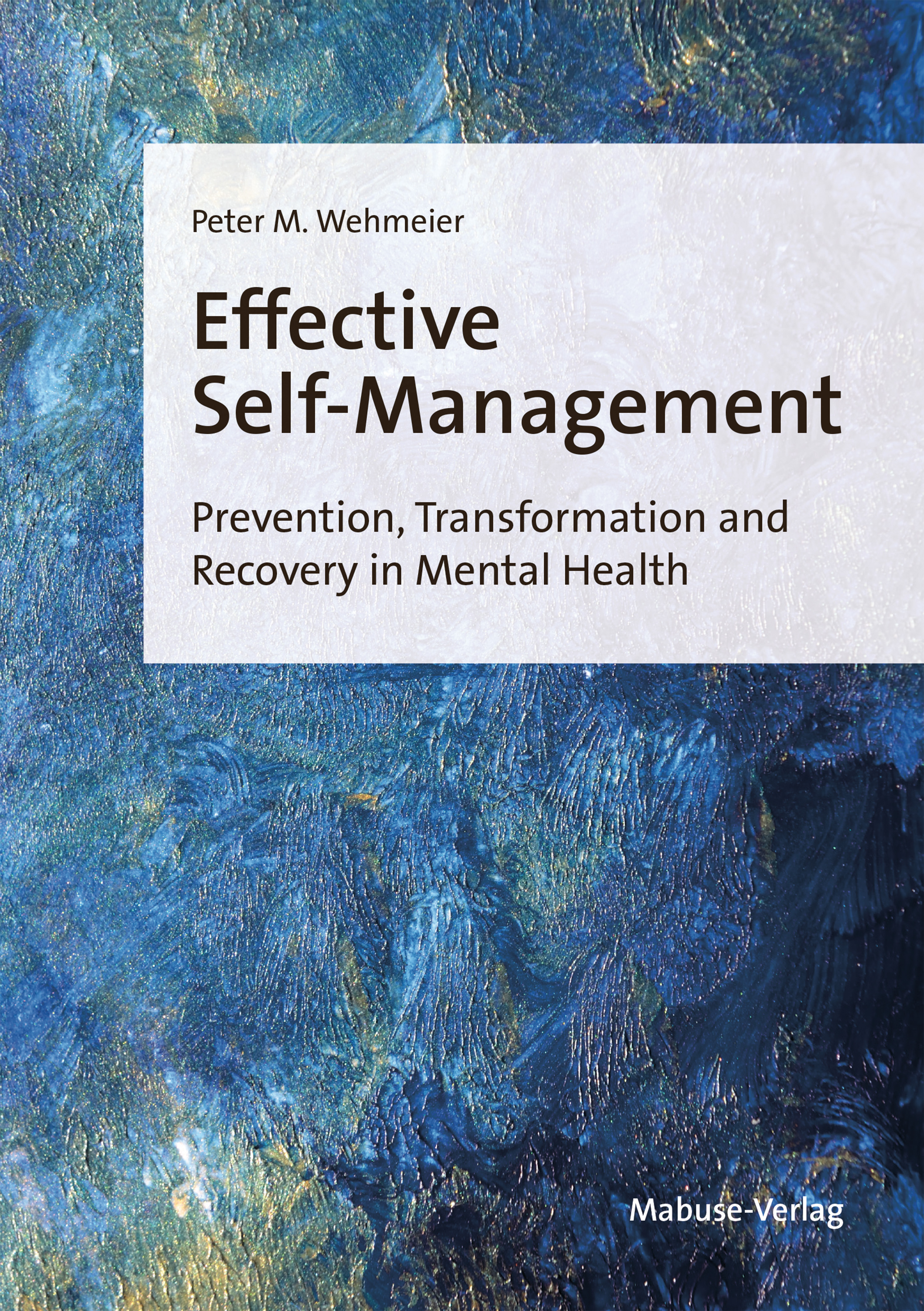
In a world defined by constant change, uncertainty, and growing pressures on mental health, the ability to manage oneself effectively has never been more important. Effective Self-Management: Prevention, Transformation, and Recovery in Mental Health offers a comprehensive and practical framework for understanding how individuals can strengthen their mental resilience and navigate life's challenges with greater clarity and purpose.
Drawing on insights from biology, psychology, social science, economics, and ecology, this book explores how the complex systems surrounding us shape our thoughts, emotions, and behaviors. It examines the impact of stress and dysregulation in modern life and explains why self-regulation and transformation are essential for maintaining mental health in an interconnected world. Through a systemic perspective, the author introduces a five-dimensional model of self-management that integrates personal awareness, social relationships, future planning, decision-making, and effective action.
To support real and measurable change, the book also presents the Self-Management Self-Test (SMST), a scientifically validated tool that allows readers and practitioners to assess progress and evaluate personal development over time. Combining theoretical insight, practical guidance, and empirical research, Effective Self-Management is a valuable resource for anyone interested in strengthening mental health, preventing psychological difficulties, and fostering lasting personal transformation.
Peter M. Wehmeier, M.D., Ph.D., is Associate Professor at Heidelberg University and a psychiatrist and psychotherapist with extensive clinical experience. He holds the postgraduate degree University Professional of Advanced Studies in Pharmaceutical Medicine from the University of Basel, Switzerland, and is a Fellow of the Association of Clinical Research Professionals (ACRP).
Dr. Wehmeier has authored more than fifty peer-reviewed scientific publications and several books on mental health and workplace stress. Together with his clinical research team, he developed and validated the Self-Management Self-Test (SMST), a psychometric tool designed to pre-screen for depression and monitor changes in mental well-being in both clinical and non-clinical populations.
He serves as Global Scientist at MindMe Corporation and contributed to the development of the BlueCloud Mind Companion and BlueCloud Mind Teams apps. With a particular focus on Corporate Mental Health, he has provided executive coaching to officers of the European Central Bank in Frankfurt, Germany. In 2025, he participated in a panel hosted by Partners for Patients (PFP-NGO) at the World Economic Forum (WEF) in Davos, Switzerland.
I. Living in a Constantly Changing World 11
The World We Live In 12
How Biology, Psychology, Society, Economy, and Ecology Shape Who We Are 14
Why Do We Need Self-Management? 18
The Importance of Global Mental Health 20
The Impact of Stress 24
The Challenge of Dysregulation 26
The Importance of Transformation 28
In the End, It's All About Self-Regulation! 31
What is Self-Management All About? 33
Self-Management Within a Virtual Triangular Space 37
How Can Self-Management Contribute to Mental Health? 40
A Five-Dimensional Approach to Self-Management 42
The Systemic Perspective on Self-Management 44
II. Managing Yourself and Others Effectively 52
Module One: Face Reality 53
How to Be Aware of Your Internal State of Mind and Perceive External Reality Clearly 53
Take a Look at Reality and Consider the Facts 55
Awareness is Essential 56
Improve Self-Perception (Introspection) 56
Identity: Who Am I Really? 57
Be Aware of Your Internal State of Mind 58
Be Aware of Your Fears and Anxieties 59
Be Aware of Your Needs 60
What Can We Do to Improve Our Awareness? 61
Perception Is Essential 62
What Can We Do to Improve Our Perception? 64
Look at Yourself 65
What Can We Do to Look at Ourselves? 67
Look at the World 69
What Can We Do to Look at the World? 72
The Value of Reflection in Self-Management 73
What Can You Do to Face Reality? Look and Listen! 75
Module Two: Remember That You Are Not Alone 77
How to Sustain Your Relationships with Others and Maintain Your Social Networks 77
People and Their Challenges 80
Coming to Terms With Yourself and Others 81
I Am Not Alone in the World 84
Being Open Towards Others 88
Caring for Others 89
Personal Relationships 91
What Can We Do to Sustain Our Personal Relationships? 93
Social Networks 94
What Can We Do to Maintain Our Social Networks? 96
Being Connected with Others 97
What Can We Do to Be Connected with Others? 99
Upholding Friendships 100
What Can We Do to Uphold Friendships? 101
The Value of Feedback in Self-Management 103
What Can You Do, Knowing You Are Not Alone? Recognize and Respond! 104
Module Three: Think Future 106
How to Set Priorities and Plan Your Own Future 106
Time Perspective: Short-Term and Long-Term 108
The Challenge of Too Many Possibilities 109
Navigating Choices: From Feeling Overwhelmed to Clear Focus 110
Which Way Should I Go? Clarifying Your Path 111
First Things First: Setting Priorities and Building Motivation 113
The Interplay of Self-Management and Motivation 114
Developing Cognitive and Behavioral Strategies 117
Plan Analysis: Individualized Approach to Change 118
What Can We Do to Put First Things First? 122
Looking Towards the Future 123
Effective Goal-Setting 124
What Can We Do to Look Towards the Future? 126
Getting Ready to Move 127
What Can We Do to Get Ready to Move? 128
Moving Forward 130
What Can We Do to Move Forward? 131
Overcoming Obstacles and Building Resilience 133
What Can You Do as You Think About the Future? Be Confident and Remain Hopeful! 136
Module Four: Make Up Your Mind 138
How to Choose Among Several Options and
Make Decisions 138
Decisions: Considering Alternatives and Making Choices 138
Looking at the Options 139
What Can We Do to Look at the Options? 140
Making Decisions: From Deliberation to Action 142
What Can We Do to Make Good Decisions? 144
Sorting Things Out: Gaining Orientation and Control 145
Evaluating Progress and Adjusting Your Approach 146
What Can We Do to Sort Things Out? 149
Committing Yourself: Turning Decisions Into Action 151
What Can We Do to Commit Ourselves? 152
Coping Styles or Defensive Functioning: Understanding Our Psychological Defenses 153
[...]
Versandkostenfreie Lieferung! (eBook-Download)
Als Sofort-Download verfügbar
- Artikel-Nr.: SW9783863217839110164
Bewerten
Ein Blick ins Buch
- Artikelnummer SW9783863217839110164
-
Verlag
Mabuse-Verlag
- ISBN 9783863217839