
Beam Shop
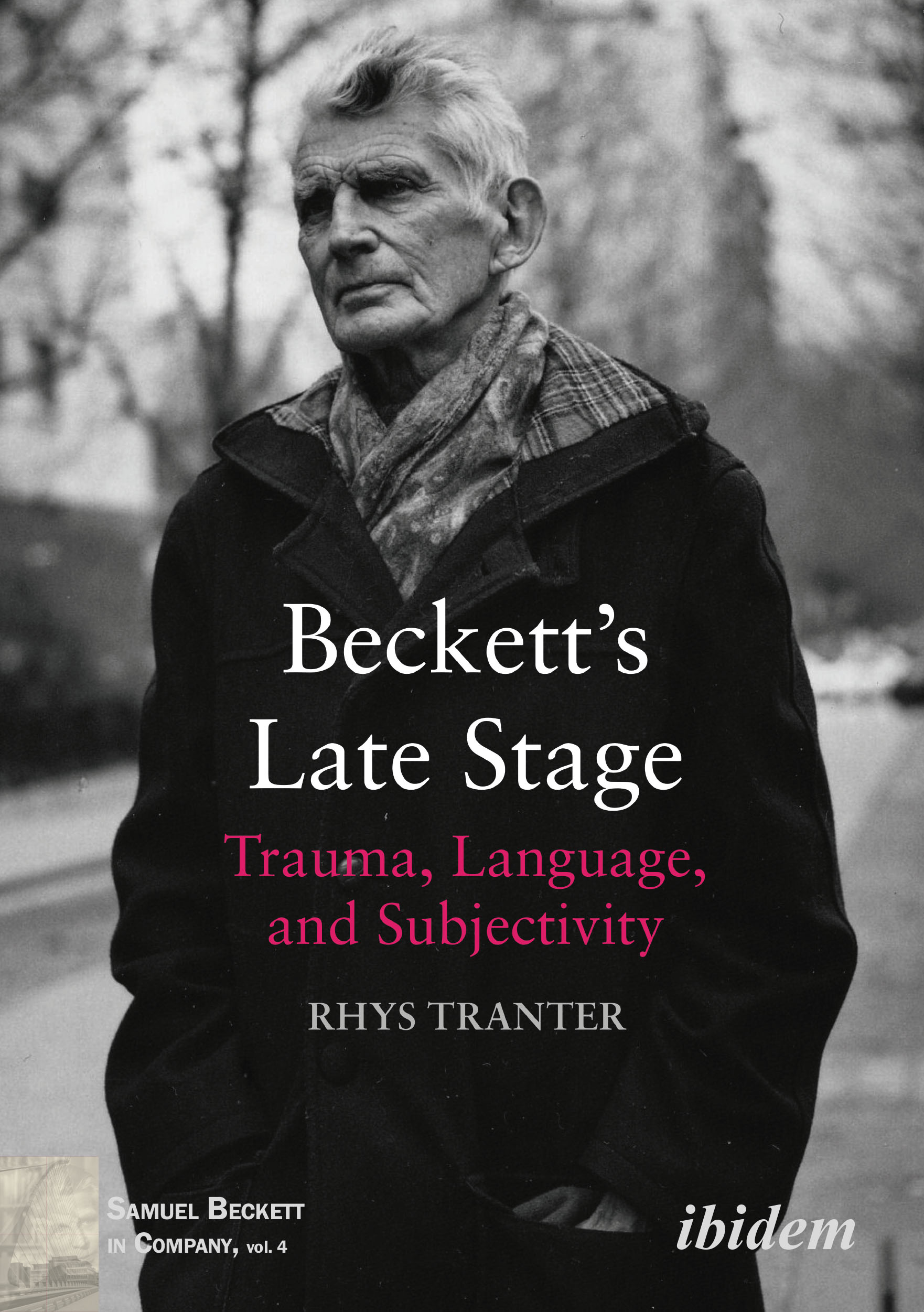
Beckett’s Late Stage
Trauma, Language, and Subjectivity
“We had always suspected that Beckett’s destitute characters, his black humour, his bleak one-liners, his cynical minimalism had to do with some form of trauma linked with war-time experiences, but no-one had attempted to read the whole post-war production as a deployment of a phenomenology of trauma. Rhys Tranter is the first to use the whole gamut of protocols developed by trauma studies and bring them to bear on Beckett’s canon from the forties to the eighties. The result is a highly rewarding book full of new insights, superb close readings, and poignant meditations on a time of wounds, yet open to a different future.”— Prof. Jean-Michel Rabaté, University of Pennsylvania
Beckett’s Late Stage reexamines the Nobel laureate’s post-war prose and drama in the light of contemporary trauma theory. Through a series of sustained close-readings, the study demonstrates how the comings and goings of Beckett’s prose unsettles the Western philosophical tradition; it reveals how Beckett’s live theatrical productions are haunted by the rehearsal of traumatic repetition, and asks what his ghostly radio recordings might signal for twentieth-century modernity. Drawing from psychoanalytic and poststructuralist traditions, Beckett’s Late Stage explores how the traumatic symptom allows us to rethink the relationship between language, meaning, and identity after 1945.
Rhys Tranter is a writer and photographer currently based in Cardiff, Wales. His writing has appeared in international publications, including the Times Literary Supplement, and he works on the editorial board of the Samuel Beckett Society. His website at RhysTranter.com promotes literature and the arts to over 10,000 daily subscribers, and was recently selected to join the British Library’s UK Web Archive.
“The book’s strength lies […] in its close reading of Beckett’s first novels and the early French stories, as well as the radio play All That Fall and the play Footfalls. Particularly welcome is the attention to pedestrianism in Beckett, who characterized existence as “just a series of movements.” “On whence / no sense / but on / to whence / no sense,” one of his late “Mirlitonnades” declares, its rondo rhythm evoking a determined pedestrial circularity.”— The European Legacy, 25:1
Versandkostenfreie Lieferung! (eBook-Download)
Als Sofort-Download verfügbar
- Artikel-Nr.: SW9783838270357450914
Bewerten
Ein Blick ins Buch
- Artikelnummer SW9783838270357450914
-
Autor
Rhys Tranter
- Mit Paul Stewart
- Wasserzeichen ja
- Verlag ibidem
- Seitenzahl 223
- Barrierefreiheit
- Keine Angabe: Keine Informationen zur Barrierefreiheit bereitgestellt
- ISBN 9783838293936
- Mit Paul Stewart