
Beam Shop
Montaigne
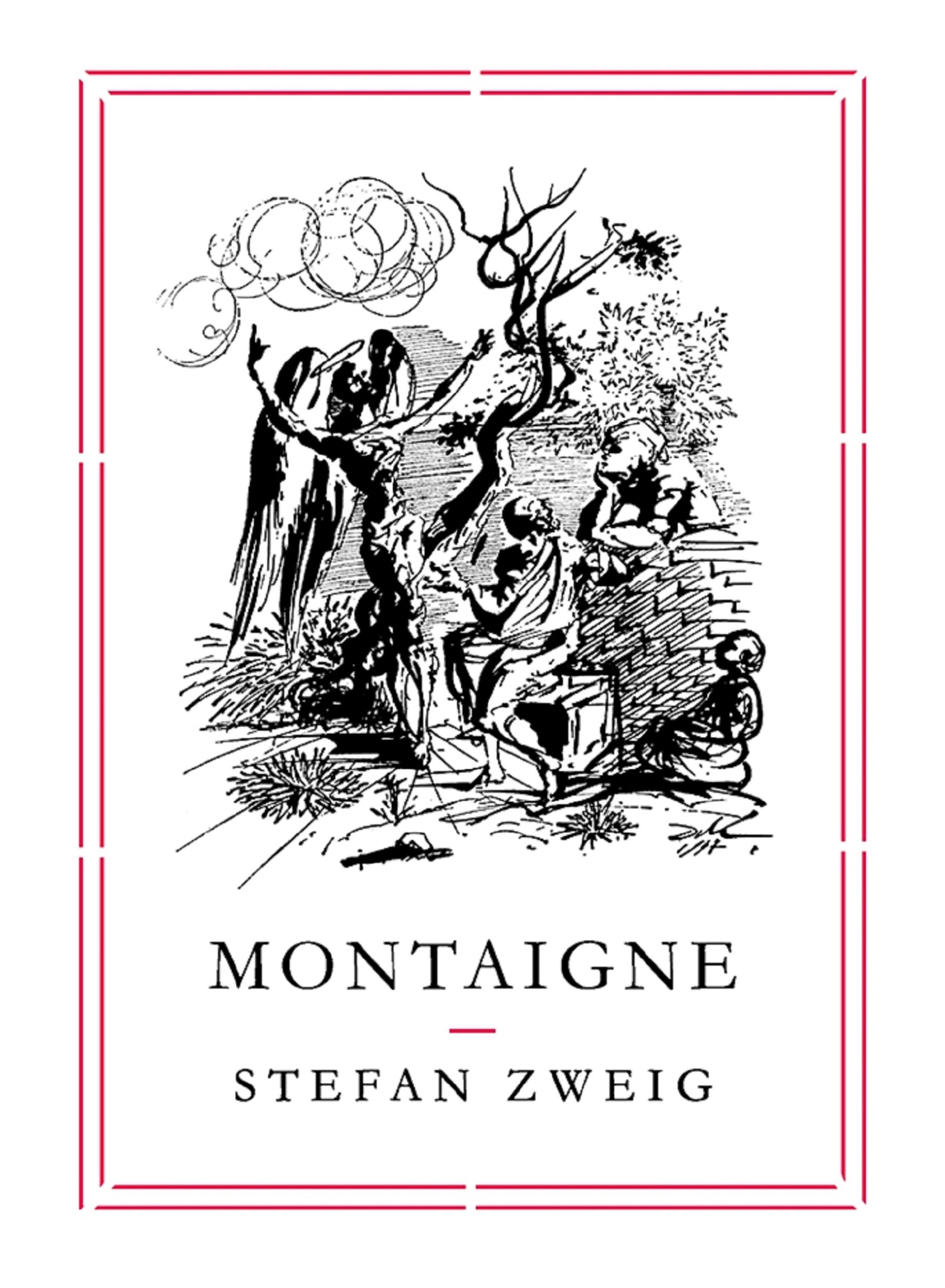
'He who thinks freely for himself, honours all freedom on earth.'Stefan Zweig was already an émigré-driven from a Europe torn apart by brutality and totalitarianism-when he found, in a damp cellar, a copy of Michel de Montaigne's Essais. Montaigne would become Zweig's last great occupation, helping him make sense of his own life and his obsessions-with personal freedom, with the sanctity of the individual. Through his writings on suicide, he would also, finally, lead Zweig to his death.With the intense psychological acuity and elegant prose so characteristic of Zweig's fiction, this account of Montaigne's life asks how we ought to think, and how to live. It is an intense and wonderful insight into both subject and biographer.
Stefan Zweig was born in 1881 in Vienna, into a wealthy Austrian-Jewish family. He studied in Berlin and Vienna and was first known as a poet and translator, then as a biographer. Between the wars, Zweig was an international bestseller with a string of hugely popular novellas including Letter from an Unknown Woman, Amok and Fear. In 1934, with the rise of Nazism, he left Austria, and lived in London, Bath and New York-a period during which he produced his most celebrated works: his only novel, Beware of Pity, and his memoir, The World of Yesterday. He eventually settled in Brazil, where in 1942 he and his wife were found dead in an apparent double suicide. Much of his work is available from Pushkin Press.
Zweig's accumulated historical and cultural studies remain a body of achievement almost too impressive to take in
Stefan Zweig's time of oblivion isover for good... it's good to have him back
[During his lifetime] arguably themost widely read and translated serious author in the world
An invaluable addition to Zweig's canon, casting as much light on the author's own preoccupation with personal and individual liberty as it does on Montaigne
Thanks to Stone's assiduous translation, Zweig's fascinating meditation on the writer in whom he saw himself mirrored appears now for the first time in English
A beautiful, perhaps even the best, reflection on the great French essayist
Will Stone's translation perfectly captures [Zweig's] cultivated Viennese flavour and pacy aphoristic elegance
one of Europe's most widely acclaimed authors in the 1920s and 1930s ...an invaluable addition to Zweig's canon, casting as much light on the author's own preoccupation with personal and individual liberty as it does on Montaigne
Versandkostenfreie Lieferung! (eBook-Download)
Als Sofort-Download verfügbar
- Artikel-Nr.: SW9781782271468110164
Bewerten
Ein Blick ins Buch
- Artikelnummer SW9781782271468110164
-
Autor
Stefan Zweig
- Mit Will Stone
- Wasserzeichen ja
- Verlag Pushkin Press
- Seitenzahl 160
- Barrierefreiheit
- ISBN 9781782271468
- Mit Will Stone