
Beam Shop
Looking for Theophrastus
Travels in Search of a Lost Philosopher
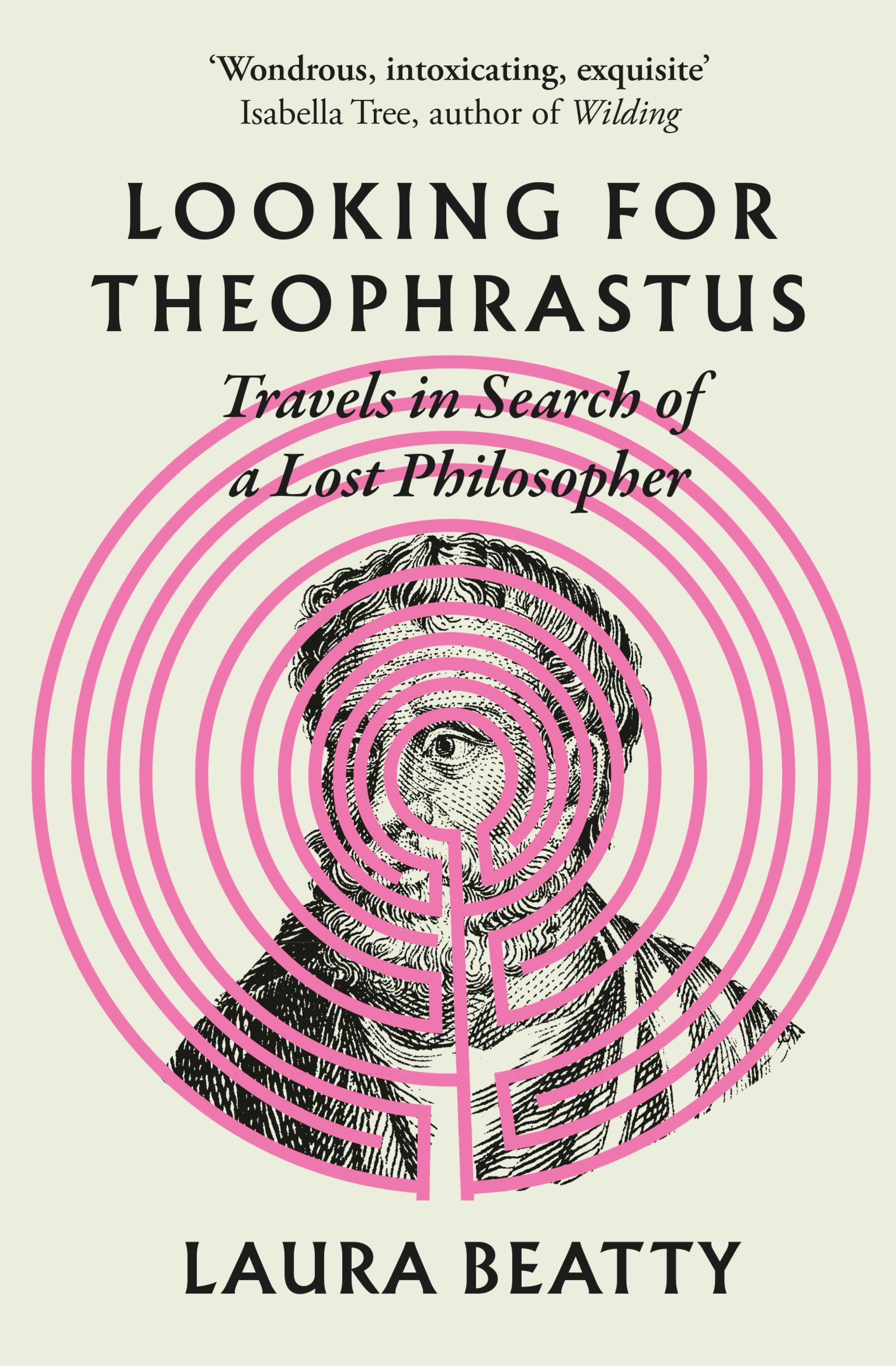
Who is Theophrastus, and why should we care?
Once, he was the equal of Plato and Aristotle. Together he and Aristotle invented science. Alone he invented Botany. The character of the Wife of Bath is his invention, the Canterbury Tales as a whole, perhaps, the product of his inspiration. When Linnaeus was developing our modern system of plant taxonomy, it was Theophrastus' work on plants that he used as a basis. So how could one man do so much and still sink almost without a trace?
This is the story of a journey to find him and bring him back from oblivion. Looking for Theophrastus, in all the places he must have walked and lived, it tells how he and Aristotle, his friend and tutor, broke with the philosophical conventions of the Academy and left on their own adventure; of how together they invented what we now take for granted as the Natural Sciences; how, not content with that, they made the great experiment of applying philosophy directly to the practicalities of government through the tutoring of Alexander the Great; how they were disappointed and how, in the end, they returned to Athens and founded the famous Lyceum.
Against the dramatic context of his time - the end of democracy in Athens and the rise of Alexander the Great; the great battles and vast territorial expansion that followed; the flowering of the philosophy schools on which so much of our culture and thinking is founded - and on, following his cultural legacy through to the modern day, it explores how we perceive, understand and, most importantly, how we relate to the world around us, questioning what we lose from our way of living when we forget those ancients who first taught us how to see.
Laura Beatty is the author of two novels, two biographies and a genre-defying book (part travel, part memoir, part fiction) about a road trip across Europe. Her first novel, Pollard, won the Authors' Club First Novel Award as well as being shortlisted for the Ondaatje Prize. She lives in Bath.
A wondrous, intoxicating, exquisitely-spun, magic carpet of a book. I'll thank Laura Beatty forever for having unearthed these precious glimpses of Theophrastus, father of natural history and curator of human nature.
Beautifully written and genre-defiant, Looking for Theophrastus is a must-read for anyone interested in history, philosophy, scientific observation, and that iridescent place where fiction and memory spill into each other. I absolutely loved this book.
Aphantasmagorical odyssey, a time-travelling reanimation of the past as full-blooded as Hilary Mantel's Wolf Hall... Made luminous with an extraordinary descriptive brilliance, what is learned through this magical, shapeshifting narrative is the preciousness not of conviction but of uncertainty, if it is shared as part of our common humanity.
Enchanting... Beatty is a writer of extraordinary power
A fierce and wonderful book... This is just the sort of generous, provocative novel the Booker judges should cherish
Versandkostenfreie Lieferung! (eBook-Download)
Als Sofort-Download verfügbar
- Artikel-Nr.: SW9781838954376110164
Bewerten
Ein Blick ins Buch
- Artikelnummer SW9781838954376110164
-
Autor
Laura Beatty
- Wasserzeichen ja
- Verlag Atlantic Books
- Seitenzahl 352
- Barrierefreiheit
- ISBN 9781838954376
- Wasserzeichen ja