
Beam Shop
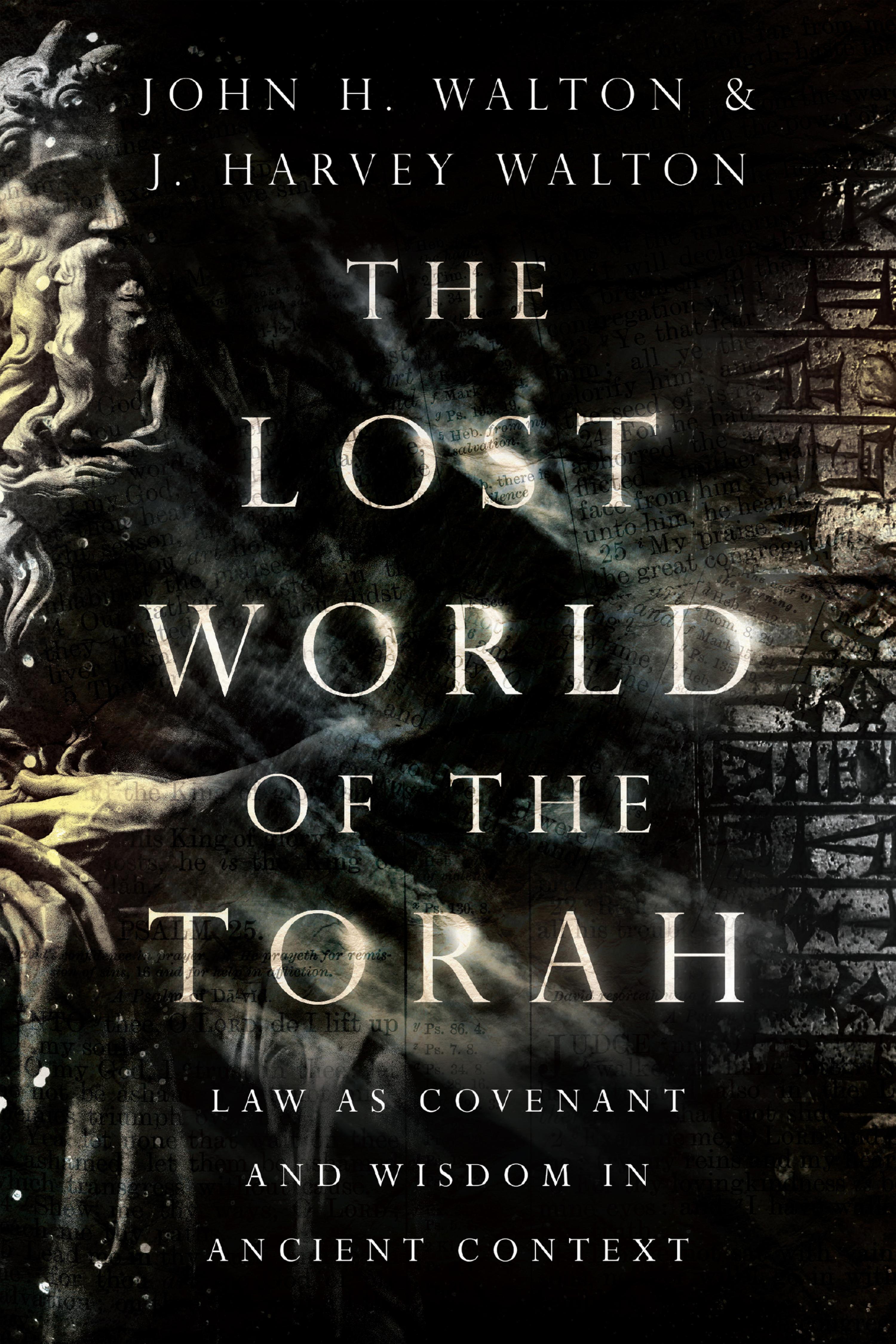
The Lost World of the Torah
Law as Covenant and Wisdom in Ancient Context
Our handling of what we call biblical law veers between controversy and neglect.
On the one hand, controversy arises when Old Testament laws seem either odd beyond comprehension (not eating lobster) or positively reprehensible (executing children). On the other, neglect results when we consider the law obsolete, no longer carrying any normative power (tassels on clothing, making sacrifices). Even readers who do attempt to make use of the Old Testament "law" often find it either irrelevant, hopelessly laden with "thou shalt nots," or simply so confusing that they throw up their hands in despair. Despite these extremes, people continue to propose moral principles from these laws as "the biblical view" and to garner proof texts to resolve issues that arise in society. The result is that both Christians and skeptics regularly abuse the Torah, and its true message often lies unheard.
Walton and Walton offer in The Lost World of the Torah a restorative vision of the ancient genre of instruction for wisdom that makes up a significant portion of the Old Testament. In the ancient Near East, order was achieved through the wisdom of those who governed society. The objective of torah was to teach the Israelites to be wise about the kind of order needed to receive the blessings of God's favor and presence within the context of the covenant. Here readers will find fresh insight on this fundamental genre of the Old Testament canon.
The books in the Lost World Series follow the pattern set by Bible scholar John H. Walton, bringing a fresh, close reading of the Hebrew text and knowledge of ancient Near Eastern literature to an accessible discussion of the biblical topic at hand using a series of logic-based propositions.
John H. Walton is professor emeritus of Old Testament at Wheaton College and Graduate School. His many books include The Lost World of Genesis One and Wisdom for Faithful Reading.
J. Harvey Walton (MA, Wheaton College Graduate School) is a researcher in biblical studies and has contributed to a variety of publications. He is pursuing graduate studies at St. Andrews University.
Introduction
Part I: Methodology
Proposition 1: The Old Testament Is an Ancient Document
Proposition 2: The Way We Interpret the Torah Today Is Influenced by the Way We Think Law and Legislation Work
Part II: Function of Ancient Near Eastern Legal Collections
Proposition 3: Legal Collections in the Ancient World Are Not Legislation
Proposition 4: Ancient Near Eastern Legal Collections Teach Wisdom
Proposition 5:The Torah Is Similar to Ancient Near Eastern Legal Collections and Therefore also Teaches Wisdom, not Legislation
Proposition 6: The Israelite Covenant Effectively Functions as an Ancient Near Eastern Suzerainty Treaty
Proposition 7: Holiness Is a Status, Not an Objective
Part III: Ritual and Torah
Proposition 8: Ancient Near Eastern Ritual Served to Meet the Needs of the Gods
Proposition 9: Ancient Israelite Ritual Serves to Maintain Covenant Order Because Yahweh Has No Needs
Part IV: Context of the Torah
Proposition 10: The Torah Is Similar to Ancient Near Eastern Legal Collections Because It Is Embedded in the Same Cultural Context, Not Because It Is Dependent on Them
Proposition 11: The Differences Between the Torah and the Ancient Near Eastern Legal Collections Are Found Not in Legislation but in the Order Founded in the Covenant
Proposition 12: Torah Is Situated in Context of the Ancient World
Proposition 13: Torah Is Situated in the Context of the Covenant
Proposition 14: Torah Is Situated in the Context of Israelite Theology Regarding Yahweh's Presence Residing Among Them
Part V: Ongoing Significance of the Torah
Proposition 15: Discussions of Law in the New Testament Do Not Tell Us Anything About Old Testament Torah in Context
Proposition 16: The Torah Should Not Be Divided into Categories to Separate Out What Is Relevant
Proposition 17: Torah Was Never Intended to Provide Salvation
Proposition 18: Divine Instruction Can Be Understood as a Metaphor of Health Rather than a Metaphor of Law
Proposition 19: We Cannot Gain Moral Knowledge or Build a System of EthicsBased on Reading the Torah in Context and Deriving Principles from It
Proposition 20: Torah Cannot Provide Prooftexts for Solving Issues Today
Proposition 21: The Ancient Israelites Would Not Have Understood the Torah as Providing Divine Moral Instruction
Proposition 22: A Divine Command Theory of Ethics Does Not Require that the Torah Is Moral Instruction
Proposition 23: Taking the Torah Seriously Means Understanding What It Was Written to Say, Not Converting It into MoralLaw
Summary of Conclusions
Appendix: The Decalogue
Further Reading
Subject Index
Scripture Index
"Walton and Walton continue their Lost World series with a study of Torah, understood as instruction rather than law, wisdom rather than legislation. They point out how Torah is often misunderstood by Christians because they assume that it functions like modern laws or Greco-Roman laws. Instead, the authors argue, the Torah should be interpreted in its ancient Near Eastern context, where order was achieved through the wisdom of those who governed society. The collections of 'laws' contained selected illustrations, intended to teach a model for right and wrong as guidance for judges but were not comprehensive legal codes that regulated everyday life in detail. This careful and readable study will be valuable for all who are interested inOld Testament law and its relevance for Christians today."
"Walton and Walton rightly view Torah in the broader context of wisdom and as an expression of wisdom. This is exactly what passages such as Deuteronomy 4:6 and Psalm 19:7 imply."
"Walton and Walton take recent scholarship on ancient Near Eastern law and apply it with great dexterity to their investigation of the biblical Torah. Ancient law codes, like the Laws of Hammurabi, very likely did not form the actual law of their respective societies, and this book is willing to face the implications of this honestly. Overall, it builds a careful and important argument for how to approach biblical law. And it is brave enough to show that most casual interpretations by modernChristians will almost inevitably go awry. One can only hope that this kind of work will begin to dampen the naive and simplistic readings that plague much of American Protestantism today."
Versandkostenfreie Lieferung! (eBook-Download)
Als Sofort-Download verfügbar
- Artikel-Nr.: SW9780830872572110164
Bewerten
Ein Blick ins Buch
- Artikelnummer SW9780830872572110164
-
Autor
John H. Walton, J. Harvey Walton
- Wasserzeichen ja
- Verlag IVP Academic
- Seitenzahl 288
- Barrierefreiheit
- ISBN 9780830872572